Blog
What to Pack for Autumn Hiking | The 5 Things I Change From Summer (Montbell Layers, Gloves, Hat & a WUBEN Light)
2026.10.13
When summer turns to autumn, I change exactly five things in my hiking pack.
This is the loveliest time of year to be on a trail. But head into the autumn mountains with your summer kit and a few things catch you out: cold mornings and evenings, weather that turns quickly, and — the one I watch most carefully — the days getting shorter.
Here are the five, up front:
1. A warm layer that doesn't overheat while you climb but keeps you warm when you stop 2. A rain jacket, which in autumn doubles as a windbreaker 3. Gloves and a hat, so you can add warmth exactly where you're cold 4. A light — two of them, even when I don't plan to be out after dark 5. A hot drink: a flask of hot water and some instant soup or cocoa
A note before we start: the light in section 4, the WUBEN E2 PULSE, was provided by WUBEN. Everything else is gear I chose and use myself, and I've written up the good points and the limits as they are.
First: these five are not the whole list
If you're new to hiking, one thing before anything else.
Whatever the season, there's a set of basics that always goes in the pack: water and trail snacks, a phone with maps or a hiking app, a power bank, and a first-aid kit — plus whatever the specific mountain and the length of the day call for.
What follows assumes all of that is already packed. These are the five things I change on top of the basics once summer is over. Use it as an autumn checklist.
1. A warm layer — Montbell CLIMAAIR LIGHT Long Sleeve T
The hardest thing about dressing for autumn is that you swing between too hot and too cold several times a day.
It's chilly at the trailhead, so you set off with a layer on — and five minutes into the climb you're overheating. Go lighter, though, and you freeze during the summit break. Stopping while you're damp with sweat is when the cold really gets in. So rather than "the warmest thing I own", I look for something that dumps heat while I'm moving but still holds some warmth when I stop.
That's Montbell's CLIMAAIR LIGHT Long Sleeve T. Pick it up and it barely weighs anything — 83 g on average.
Look closely at CLIMAAIR LIGHT and it isn't quite like ordinary fleece: it uses long, lofty fibres that trap air between them, which is how it stays warm while being so light. What makes it right for autumn, though, is breathability. The knit is deliberately open, so heat and moisture escape easily.
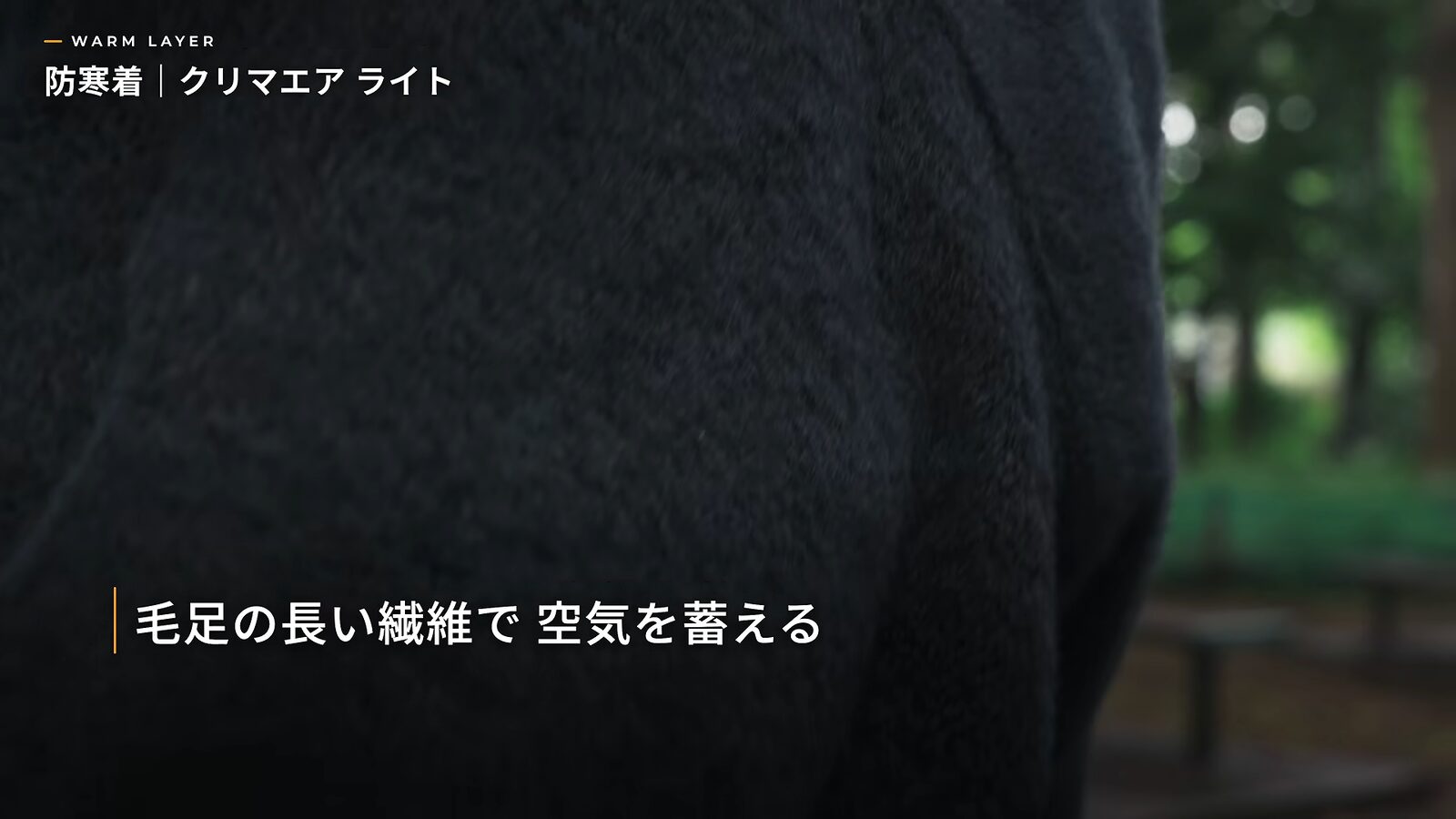
I think of it as an autumn mid-layer, not a winter insulator. Because wind passes through it, on a breezy day I put a rain jacket over the top (more on that in a moment).
- Too warm? Take it off.
- Cold? Put it on.
- Wind picking up? Add a shell over it.
That kind of fine adjustment is what works best for me in autumn. And at 83 g, carrying it all day and never wearing it costs me almost nothing. Even on days that look warm, one goes in the pack.
For how the CLIMAAIR family compares and how I layer it in winter, see my comparison of Montbell's four fleeces.
2. A rain jacket — Montbell Rain Trekker Jacket
A rain jacket comes with me all year. In autumn, though, it gets used for more than rain.
Mine is Montbell's Rain Trekker Jacket. The current model is 3-layer GORE-TEX, rated to 20,000 mm or more, at 272 g on average. The face fabric is on the tougher side, and Montbell pitches it as covering everything from entry-level to hard use.
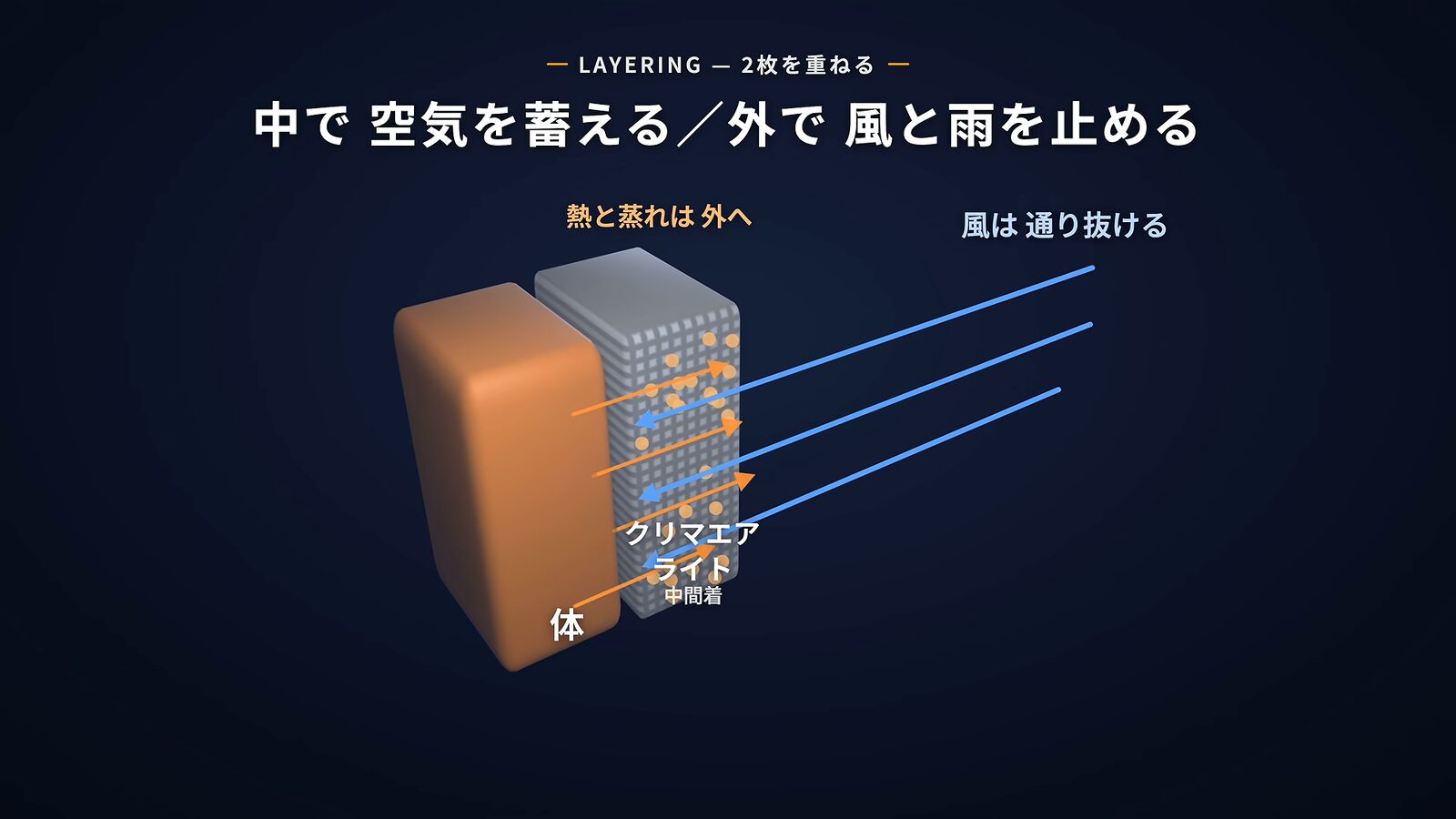
In the autumn mountains I treat it as a windbreaker too. The CLIMAAIR LIGHT is so breathable that it can feel cold in the wind — so the Rain Trekker goes over it.
- Inside: something that traps warm air (CLIMAAIR LIGHT)
- Outside: something that blocks wind and rain (Rain Trekker)
Those two together let me tune for the day's temperature and wind. Even on a clear autumn day, a strong wind on a ridge or summit can drop the feels-like temperature sharply.
The Rain Trekker has a slightly relaxed cut, so it goes on easily over a mid-layer, and the hood adjusts to follow your head as you turn, which helps keep your view clear in wind and rain.
You may be tempted to leave it at home when the forecast is sunny. Mountain weather changes, and it doubles as warmth, so I bring it regardless. If you're just starting out, it helps to think of a rain jacket not as "something you pack when rain looks likely" but as something that simply lives in your pack.
3. Gloves and a hat — CHAMEECE Gloves and a Padded Cap
If you barely touched these in summer, autumn is when small accessories start to make a real difference.
Gloves: Montbell CHAMEECE Gloves (21 g)
My gloves are Montbell's CHAMEECE Gloves — thin fleece gloves at just 21 g on average.
CHAMEECE is made from extremely fine microfibre, roughly a tenth the thickness of a human hair. It's thin, but the fibres trap air for warmth, and it breathes and dries quickly — good for the stop-start rhythm of hiking.
I choose something this thin in autumn because I can still do fiddly things with them on. They're not as warm as heavy winter gloves, but gripping trekking poles or opening a pack is easy, and they work with touchscreens, so I don't have to pull them off every time I check the hiking app.
On colder peaks or closer to winter, they won't be enough on their own. Then I switch to thicker gloves, or wear the CHAMEECE pair as liners — again, matched to the mountain.
Hat: Montbell STRETCH CLIMAPLUS200 Padded Cap (81 g)
The hat is Montbell's STRETCH CLIMAPLUS200 Padded Cap, 81 g on average.
STRETCH CLIMAPLUS200 is a mid-weight fleece with a lot of stretch, so it sits snugly on the head. What I like for autumn and winter hiking is the shape: from the side, it comes right down over the ears.
You can feel fine while walking and then find your ears and head going cold at the summit break — and in wind, cold ears alone make me feel properly chilly. Having one hat that covers them is reassuring.
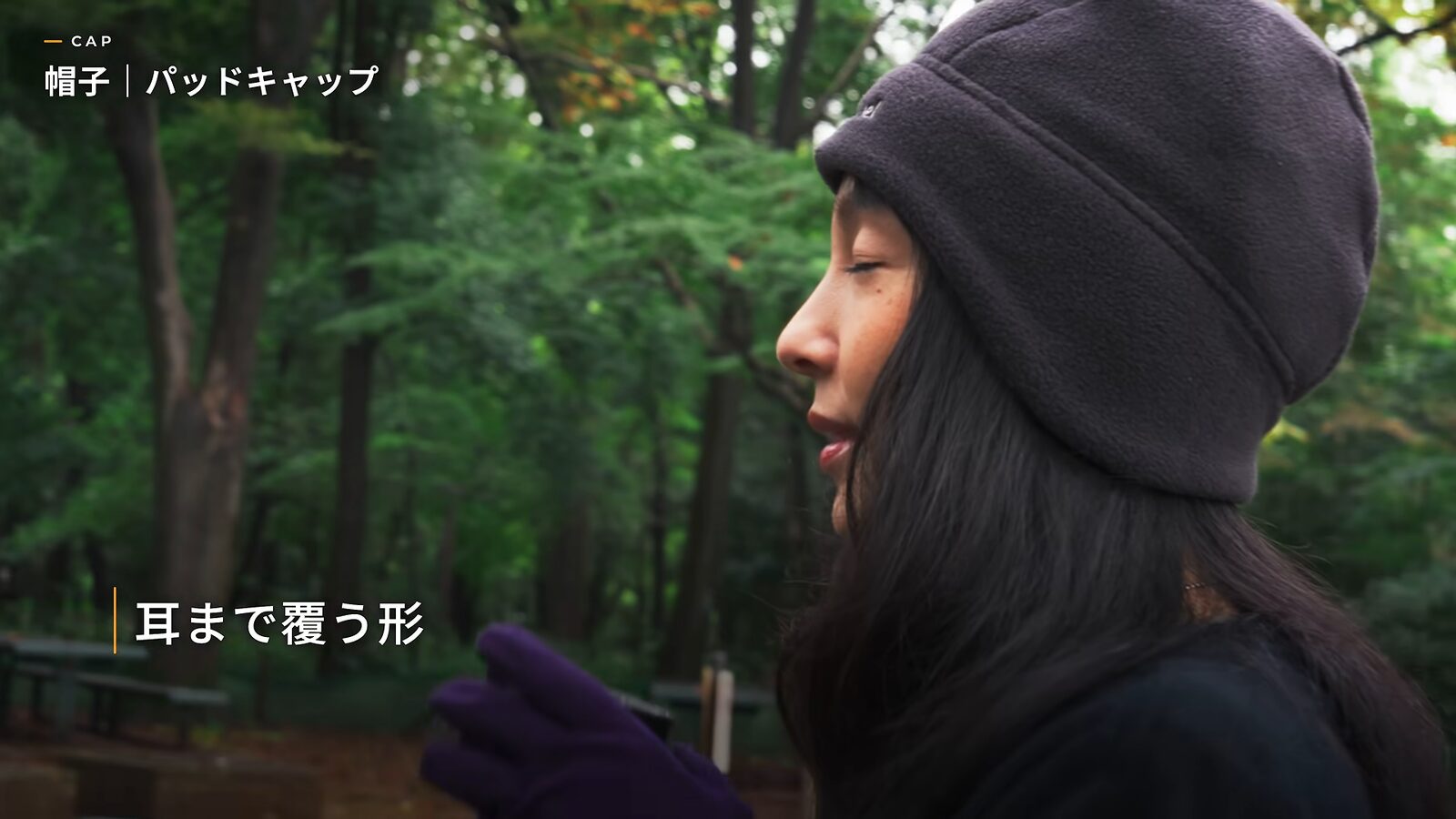
That said, Montbell describes it as a cap suited to snow sports, so it's a warm one. On a mild day on a low autumn peak you may not need it, and your usual hat is plenty. I decide by the altitude of the mountain and the forecast temperature for the day.
Add warmth where you're cold, rather than everywhere
My approach to autumn warmth isn't to pile on layers until I'm warm all over. Instead:
- Cold hands → gloves
- Cold ears or head → hat
- Cold body → mid-layer
Patch the cold spots with small pieces, and it's easy to take them off again when you warm up. Temperatures differ between morning and midday, and between trailhead and summit, so not trying to wear the same outfit all day is one of the keys to autumn hiking.
I go further into keeping the neck and wrists warm in the "three necks" rule for winter warmth.
Autumn days get dark surprisingly early
Everything so far has been about the cold. The other thing to watch in autumn is how early it gets dark.
I turned this into a quiz in the video. In Tokyo, sunset on 1 August is around 18:46; on 16 October it's around 17:05 (National Astronomical Observatory of Japan). That's roughly an hour and forty minutes less daylight in the evening than at the height of summer. Hike on summer instincts and you can find yourself thinking, "Wait — it's this dark already?"
I always plan to be off the mountain before dark. But hikes take longer than planned sometimes. That's why a light comes with me even when I don't intend to use it.
4. A light — WUBEN E2 PULSE as backup, E7 as the main
E2 PULSE: a 10.7 g backup you'll actually carry
The light I'm bringing is the WUBEN E2 PULSE.
The first thing you notice is the size: about 4 cm long and 10.7 g (manufacturer's figures). The more safety items you add, the heavier the pack gets — but this is small enough that "I probably won't need it, but in it goes" is an easy decision.
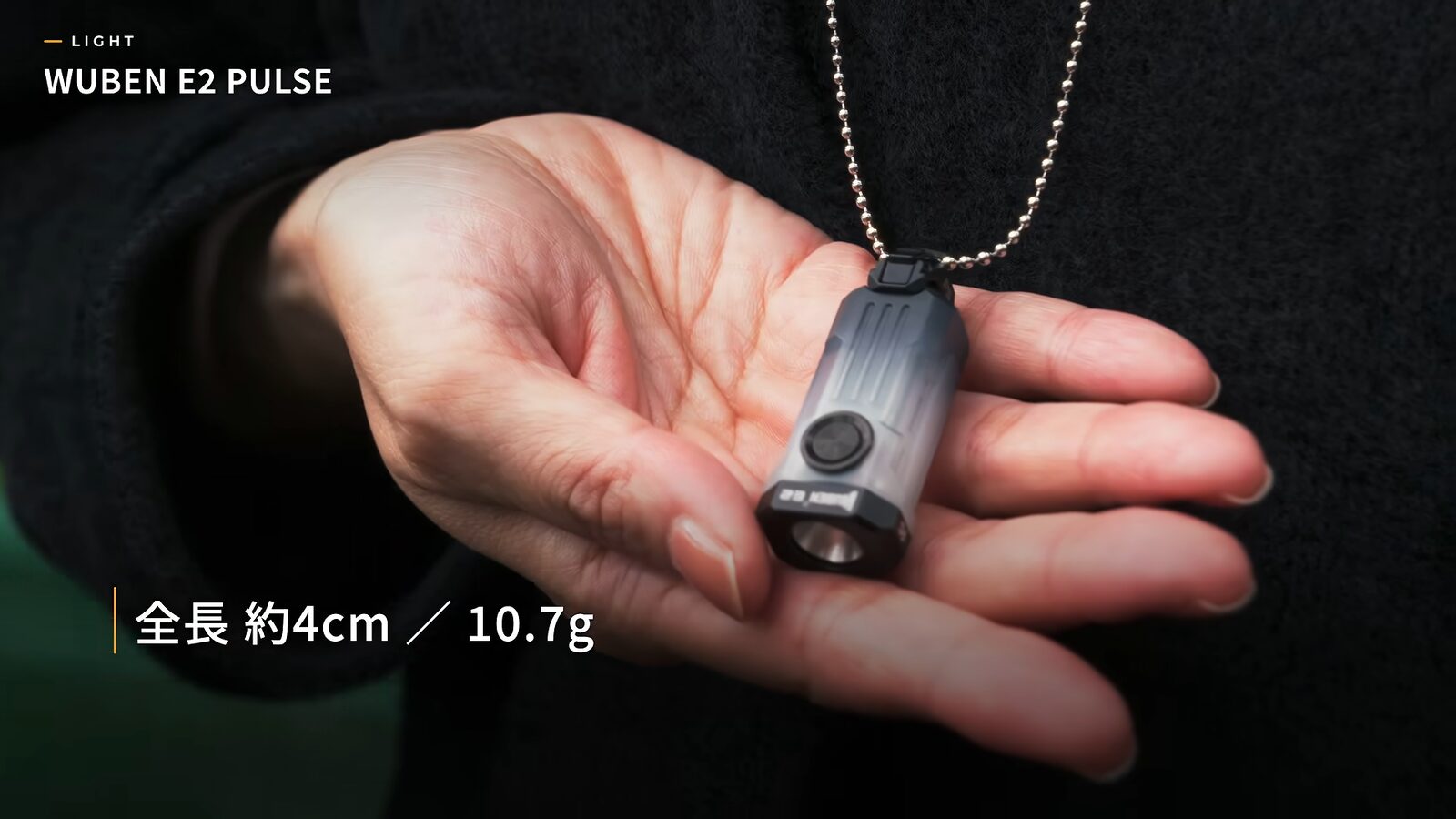
Here's what I found using it after dark, alongside the manufacturer's specs:
- Main beam: up to 150 lumens, but only for around 30 minutes at the brightest setting (it steps down to 100 lumens after about a minute)
- Lowest mode (5 lumens): around 7 hours
- Side light: a second light on the side, which I switch to for close-up tasks
- Red light: lets others see where you are in the dark
- Charging: USB-C, straight from the power bank that's already in my basic kit — no spare batteries to carry
- Magnet: on the base, so you can stick it to something metal and keep both hands free
It was genuinely handy for checking my footing and rummaging in my pack.
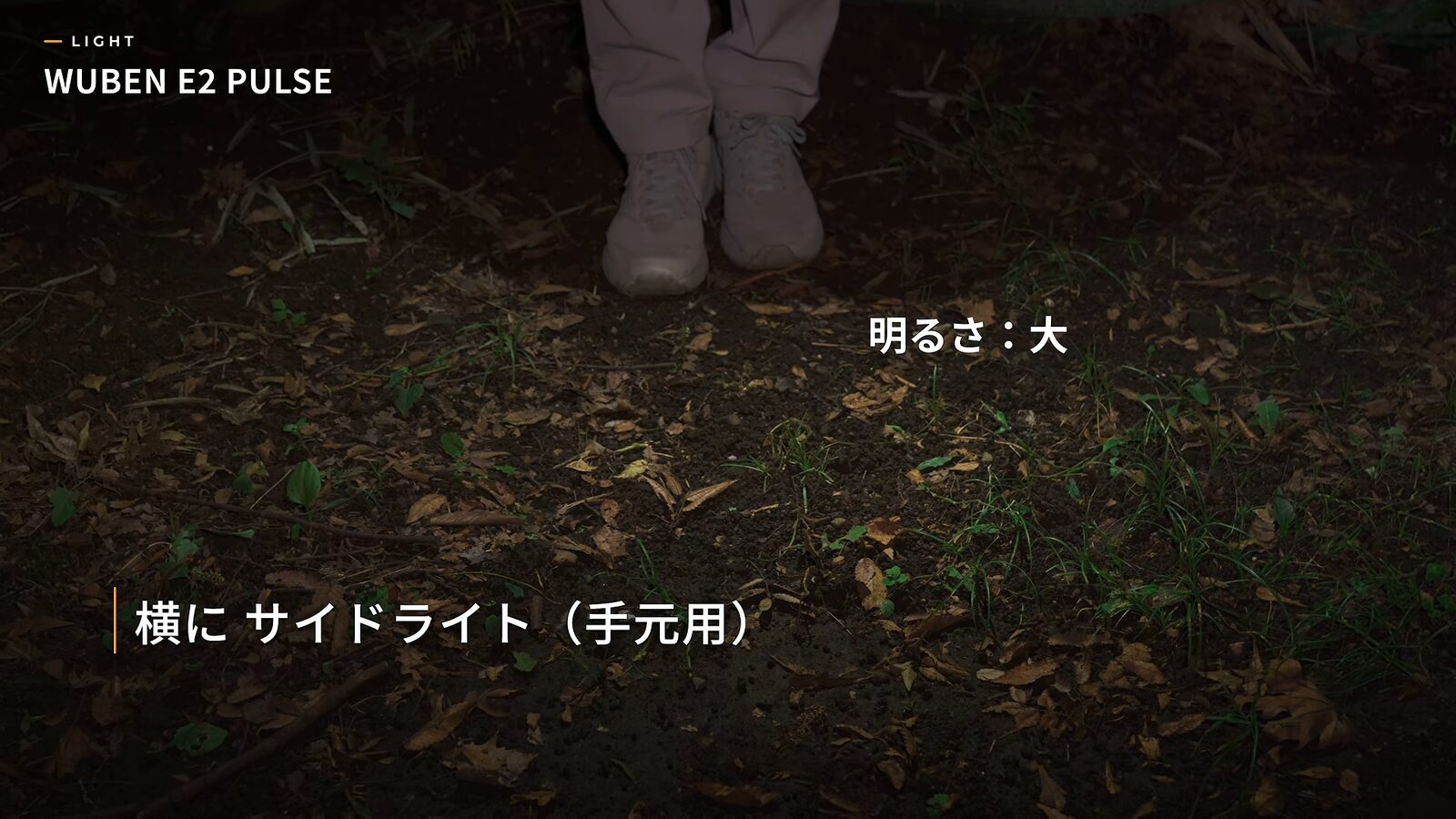
But I don't use the E2 PULSE as my main light for hiking in the dark. Full brightness lasts about half an hour, which isn't what you want for a long walk on an unlit trail. It's a backup — the light for when the plan falls apart.
What it does brilliantly is disappear into an everyday bag. It's ready for a power cut or an emergency, and rather than living in a disaster kit at home, it can be a light you simply always have on you. To me that's the best thing about it.
E7: the main light when you need real brightness
If you want proper brightness, WUBEN also makes the E7: up to 1,800 lumens (manufacturer's figure). It's a different tool from the E2 PULSE entirely, and shining both from the same spot makes the difference obvious.
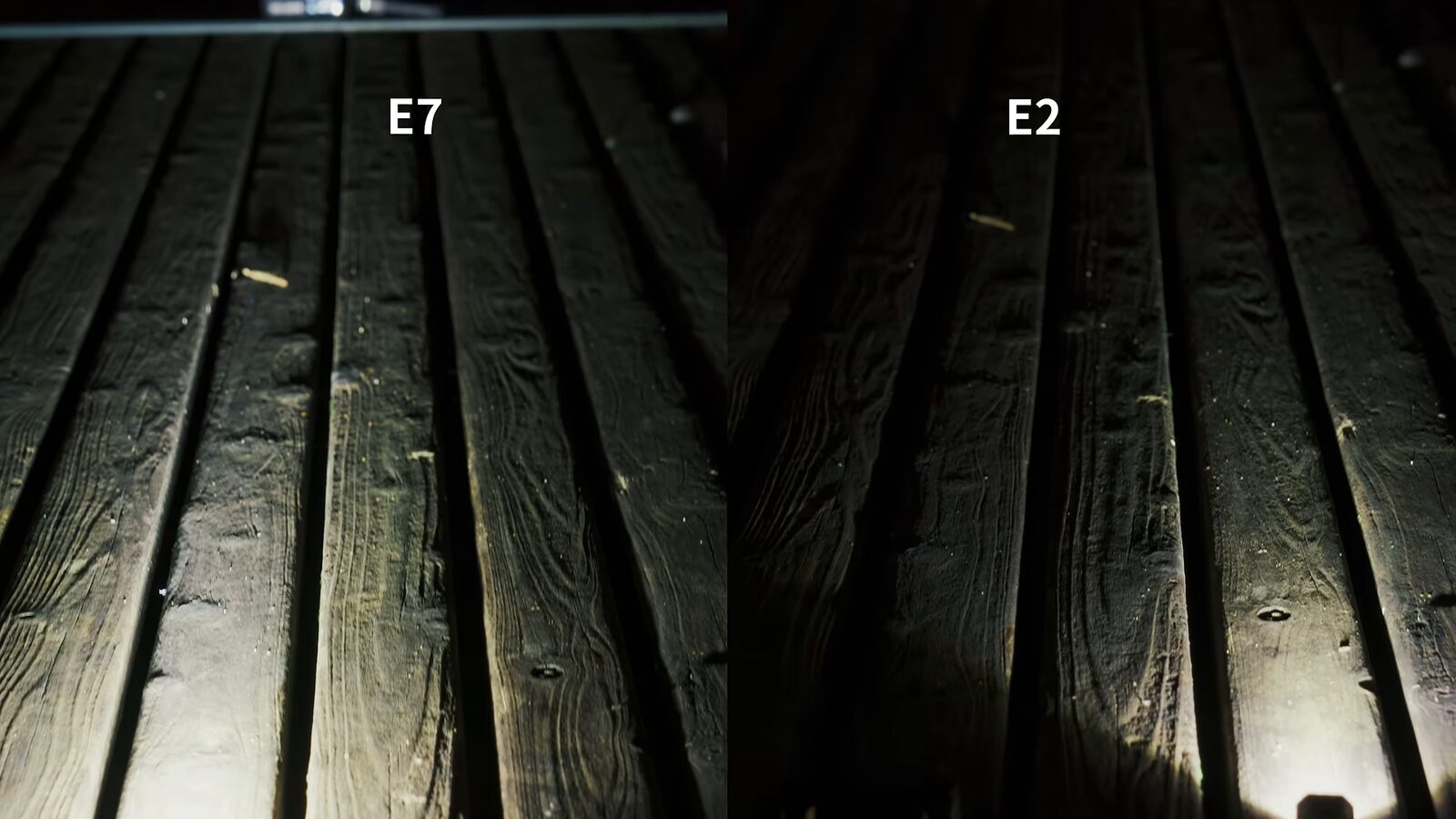
With a headband, the E7 becomes a headlamp. On a descent after dark, having both hands free changes how safe you feel.
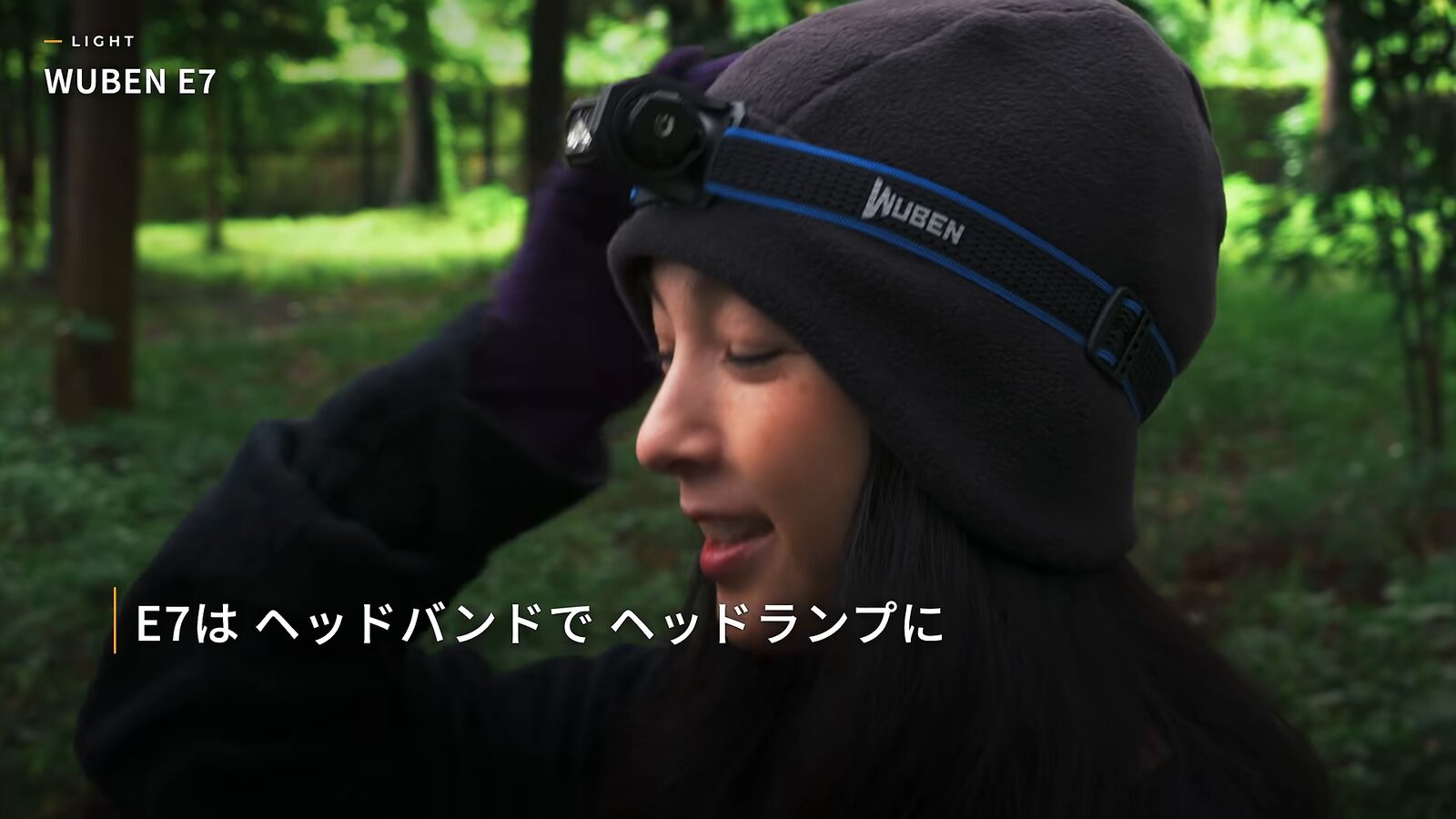
- E2 PULSE — a tiny, easy-to-carry backup
- E7 — the light for when you need real brightness
That's the simplest way to choose between them.
WUBEN E2 PULSE, Black (10.7 g, up to 150 lumens, USB-C)
WUBEN E2 PULSE, Red (10.7 g, up to 150 lumens, USB-C)
WUBEN E7 (up to 1,800 lumens, works as a headlamp)
A light doesn't make it OK to get caught out
One more thing. Carrying a light doesn't mean it's fine to be out after dark. My plan is always to finish in daylight; the light is there for when that plan breaks down.
With shorter days, starting a little earlier than you would in summer matters more than any light you pack.
For how far a small light gets you on a dark trail, see my night hike up Shonandaira with the WUBEN G5.
5. A hot drink — a flask and instant soup
In autumn, what I eat on the trail changes a little too.
I fill a vacuum flask with hot water and bring sachets of instant miso soup and something sweet like cocoa. Powders weigh almost nothing, and I can go savoury or sweet depending on my mood.
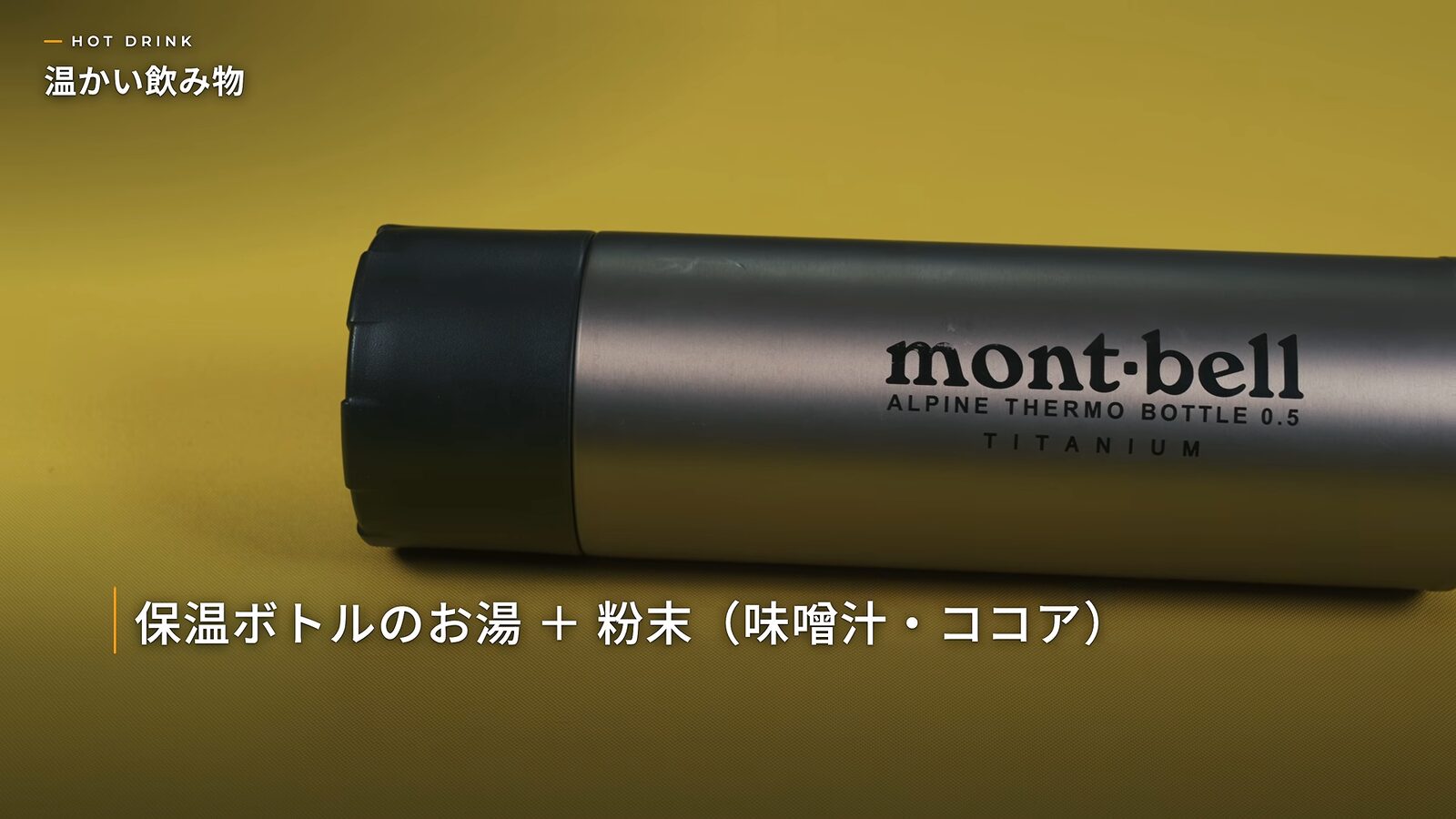
When the wind blows at the summit it gets colder than you expect, especially once the sweat has dried. Just having something hot to drink takes the edge off — and it adds one more small pleasure to an autumn summit.
The five that go in my autumn pack
To finish, here's the list:
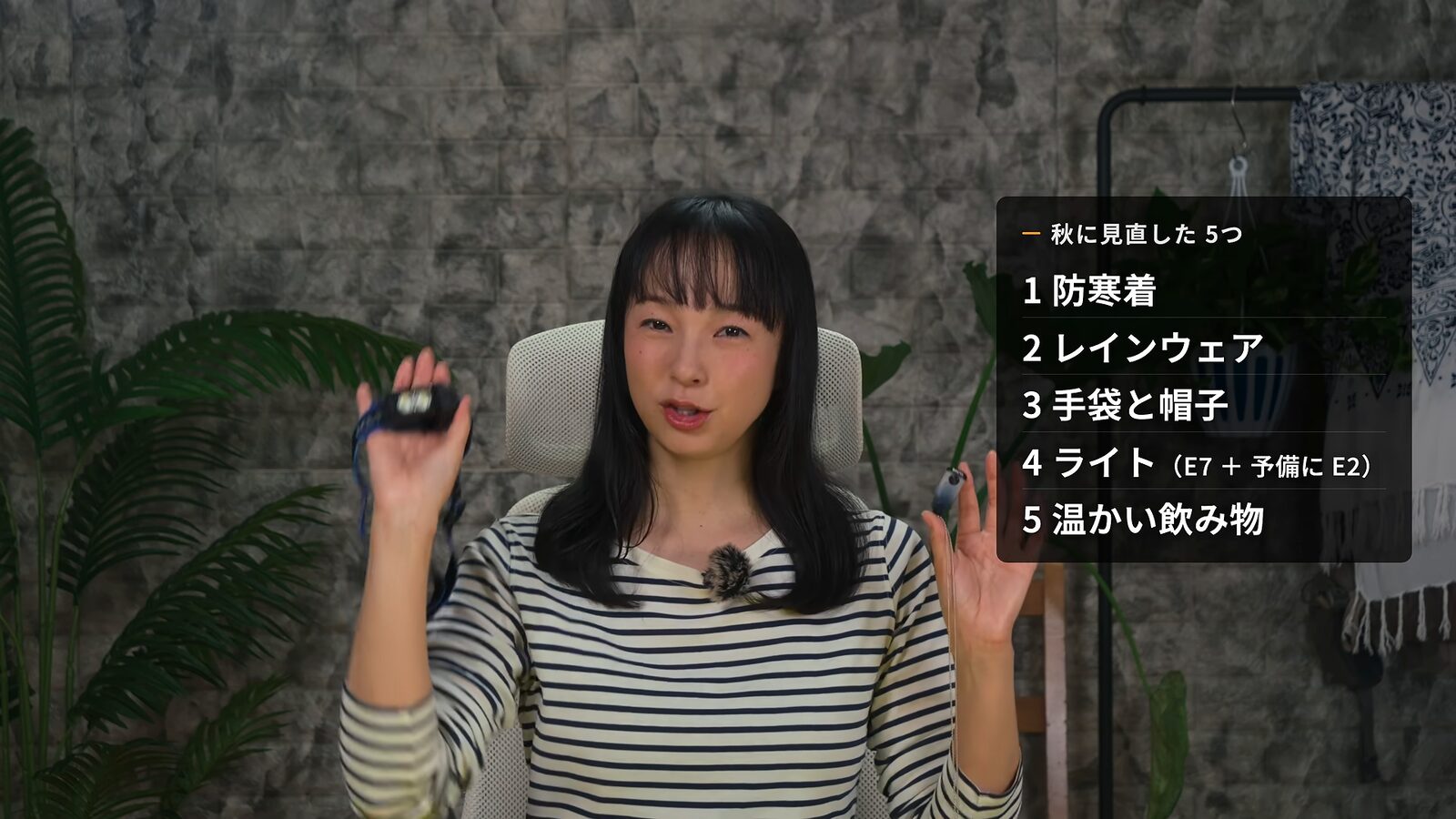
- Warm layer: CLIMAAIR LIGHT Long Sleeve T (83 g) — an autumn mid-layer for hot climbs and cold stops
- Rain jacket: Rain Trekker Jacket (272 g) — rain protection plus a windbreaker on ridges and summits
- Gloves and hat: CHAMEECE Gloves (21 g) / Padded Cap (81 g) — add warmth only where you need it
- Light: E7 (headlamp) + E2 PULSE (backup, 10.7 g) — evenings are about 1 hour 40 minutes shorter than in summer
- Hot drink: a flask of hot water + instant miso soup or cocoa — warms you back up at the summit
For the lights, the E7 goes in as my headlamp and the E2 PULSE as the spare — both of them, every time. If your light fails after dark, that's where you stop moving.
Montbell CLIMAAIR LIGHT Long Sleeve T Women's (avg. 83 g)
¥4,000 (Montbell official, October 2026)
Montbell Rain Trekker Jacket Women's (GORE-TEX 3-layer, avg. 272 g)
¥28,200 (Montbell official, October 2026)
Montbell CHAMEECE Gloves Women's (avg. 21 g)
¥2,200 (Montbell official, October 2026)
Montbell STRETCH CLIMAPLUS200 Padded Cap (avg. 81 g)
¥4,400 (Montbell official, October 2026)
Autumn is a wonderful season to walk: not too hot, and the scenery is beautiful. But the conditions are different from summer — colder mornings and evenings, less daylight. You don't need to carry everything. Just asking yourself "what changes now that it's autumn?" goes a long way towards enjoying it with peace of mind.
Some days I carry the warm layer, the rain jacket and the light all day and never use any of them. I don't think of that as wasted. Being prepared let me walk calmly — and that's what let me take my time and enjoy the autumn views.
If there's something you always pack for autumn hikes, I'd love to hear about it in the video's comments. Stay safe, and enjoy the autumn mountains.
※ This article is based on a video featuring a product provided by WUBEN (the WUBEN E2 PULSE). Weights and specifications are the manufacturers' published figures as of September 2026; Montbell prices are from the official online store as of October 2026.
※ As an Amazon Associate, Yoshimi Iwasaki earns from qualifying purchases.
Related posts

Montbell's Four Fleeces Compared | Why CLIMAAIR Is the One I Move In

WUBEN G5 Honest Review | Can a 52 g Keyring Light Get You Up a Mountain After Dark?

The "Three Necks" Rule for Winter Warmth, and 5 Montbell Pieces That Do It | Neck, Wrists, Ankles

A Whole Summer in 10 Montbell Pieces | An Honest Minimal Wardrobe
Enjoyed this? Subscribe on YouTube.
Honest reviews of hiking gear and apparel, plus hiking vlogs from Japan — new videos every week.
▶ Subscribe on YouTube →Brands: for video production and wear-test enquiries, get in touch →
This post contains affiliate links. Prices and specifications are as of the video's publication date. Most items are sold in Japan.