Blog
DWARF mini Review | Can an 840 g Smart Telescope Capture the Andromeda Galaxy? [Utsukushigahara, Japan]
2026.10.16
From a patch of sky that looks empty to the naked eye, a palm-sized smart telescope pulled out the Andromeda Galaxy. It took about an hour and a half of waiting on a foggy plateau in central Japan, but it worked.
I'm not someone who knows the constellations, and I had never run a telescope on my own. With the DWARF mini, I simply picked a target in a smartphone app. The telescope found it, tracked it, and kept stacking photos until the galaxy appeared.
The short version:
- You don't need to know the night sky. Tap a target's name and the telescope slews to it and finds it by itself
- Dark skies matter more than anything. From Tokyo, no amount of stacking showed much at all. Driving somewhere dark was worth it
- Waiting is part of the process. It took 279 frames of 15 seconds each before the shape of the galaxy really came through
The DWARF mini used in this video was provided by DWARFLAB. I've written about the good parts and the difficult parts as they were.
What is the DWARF mini?
The DWARF mini is a "smart telescope" that you control from a smartphone app. It weighs 840 g, and the camera and optics are built into one compact body you can hold in one hand.

Using it is simple:
1. Mount it on a tripod, power it on and connect your phone 2. Tap the name of the object you want on the app's sky map 3. The telescope turns, finds the object, and keeps shooting while it tracks it
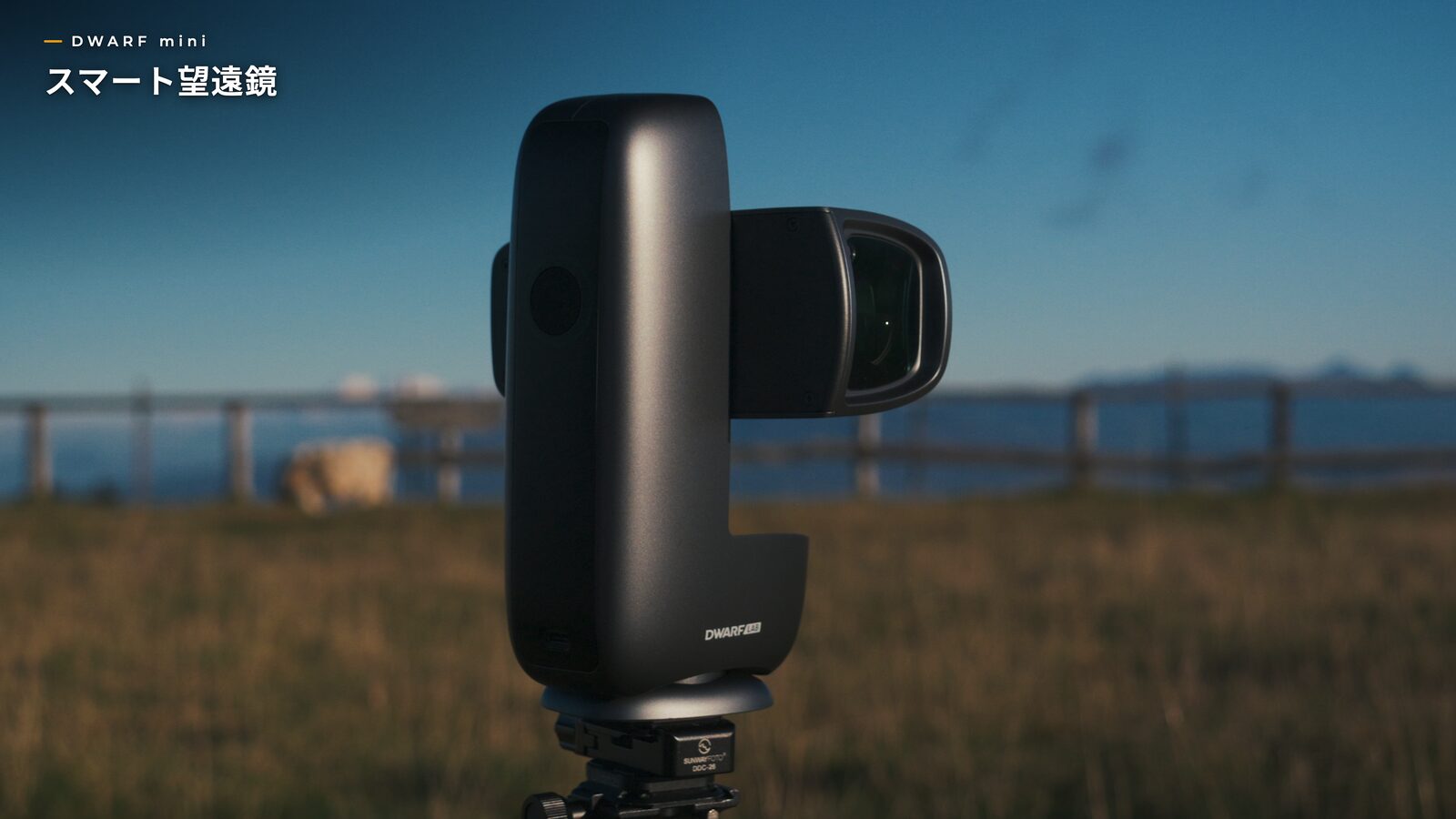
A single frame of a faint object shows almost nothing. The DWARF mini automatically stacks the frames it takes, gradually lifting faint light out of the noise. So the result depends on how long you're willing to wait.
A test run on the Sun
Before the main trip, I tried it on the Sun in September. The sunspots came out clearly, with two visible at lower right.
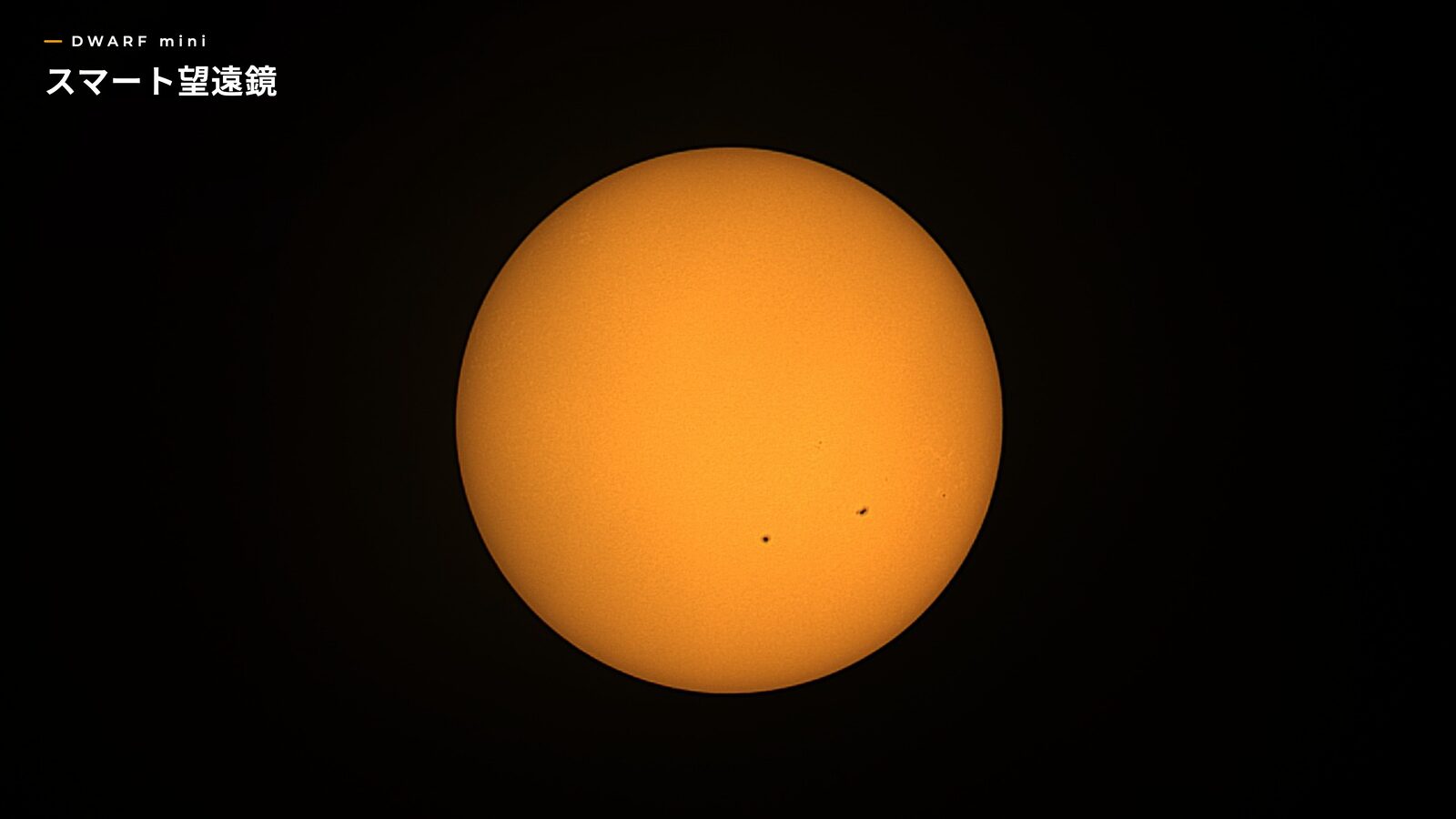
Important: always fit a dedicated solar filter before pointing any telescope at the Sun. Without one you can damage the equipment, and it is genuinely dangerous.
Tokyo's sky was too bright
Then the real question: what about the night sky? I first aimed at the Andromeda Galaxy from Tokyo. No matter how many frames I stacked, almost nothing showed up. The city lights simply make the sky too bright.
So I headed for Utsukushigahara, a high plateau in Nagano Prefecture at around 2,000 m, about three and a half hours' drive from Tokyo. It's known for fog, so there was no guarantee of clear skies. I wanted to try under a truly dark sky anyway.
Daytime: scouting the plateau and walking to Ougatou
When I arrived, I used the afternoon to walk the plateau and scout a shooting spot. My goal was Ougatou, the highest point of Utsukushigahara, which is one of Japan's 100 Famous Mountains.
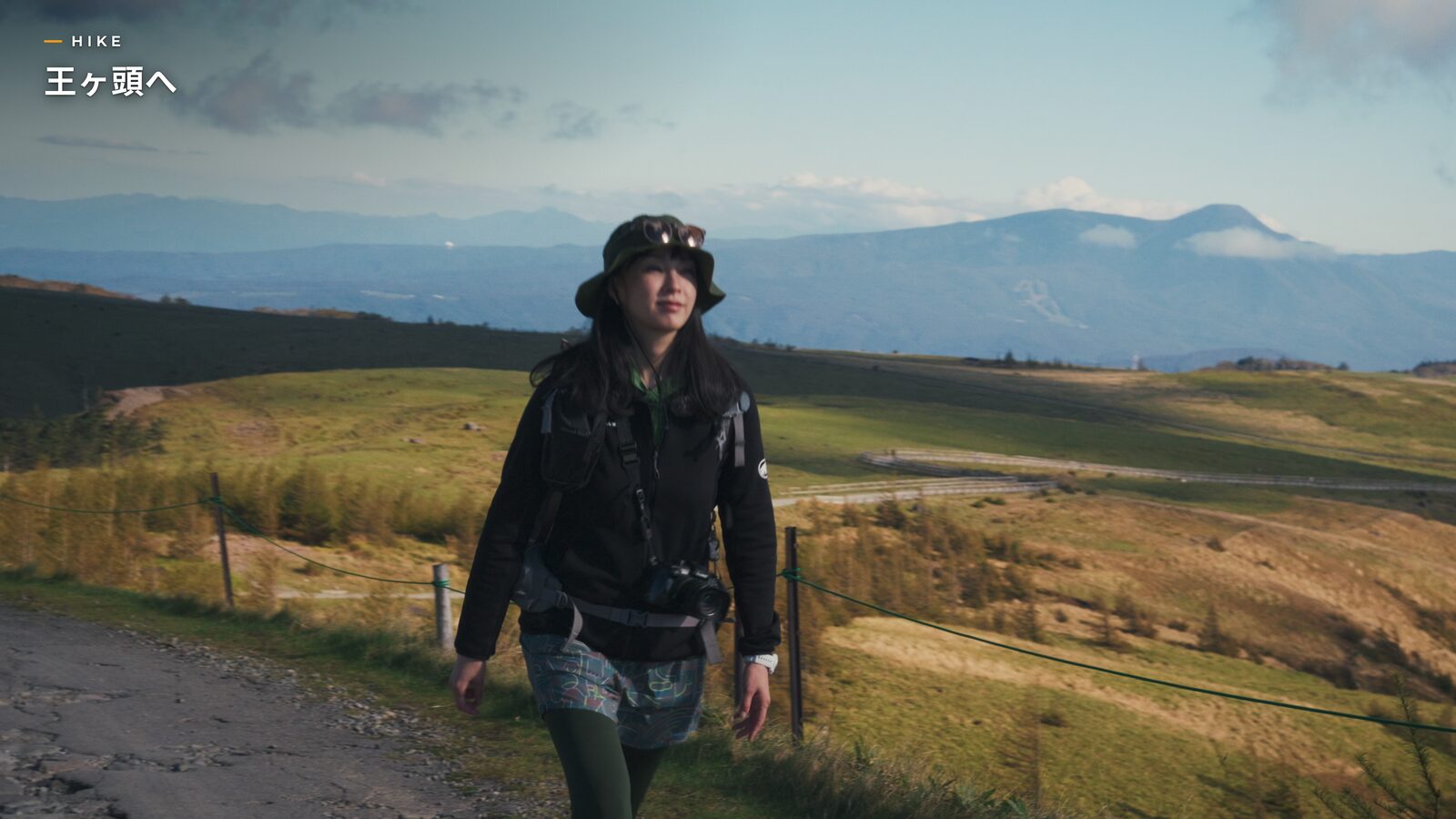
Along the way is the Utsukushi Tower, where a stone monument carries a poem about the lava plateau by the poet Kihachi Ozaki. There are benches and a wide-open sky, so I decided this would be my spot for the night.
At the top of Ougatou there is a triangulation point marked "2034.37 m". You can reach it on an easy walking trail from the parking area, which makes it one of the gentlest of the 100 Famous Mountains.
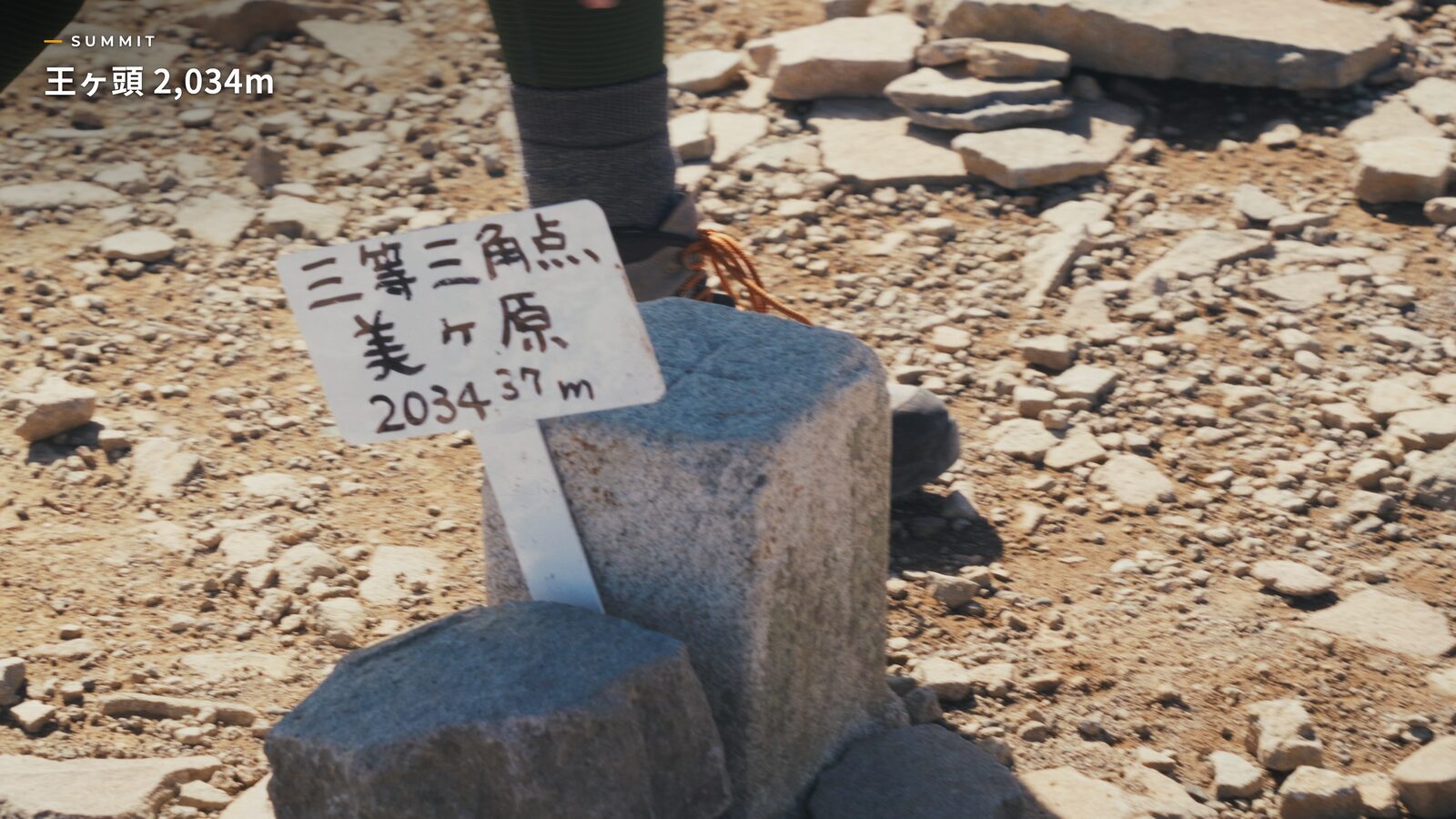
Next to the summit is the Ougatou Hotel, where I had beef stew for lunch. The bread is baked right there, and it was delicious. On the walk back, cows were grazing just a few steps from the trail.

Night: waiting out the fog
After getting ready at the car, I returned to the Utsukushi Tower. At 5 p.m. it was already 8°C, with sunset at 5:24 p.m. (per the National Astronomical Observatory of Japan). The plateau cools down fast after dark, so dress as if it were winter.
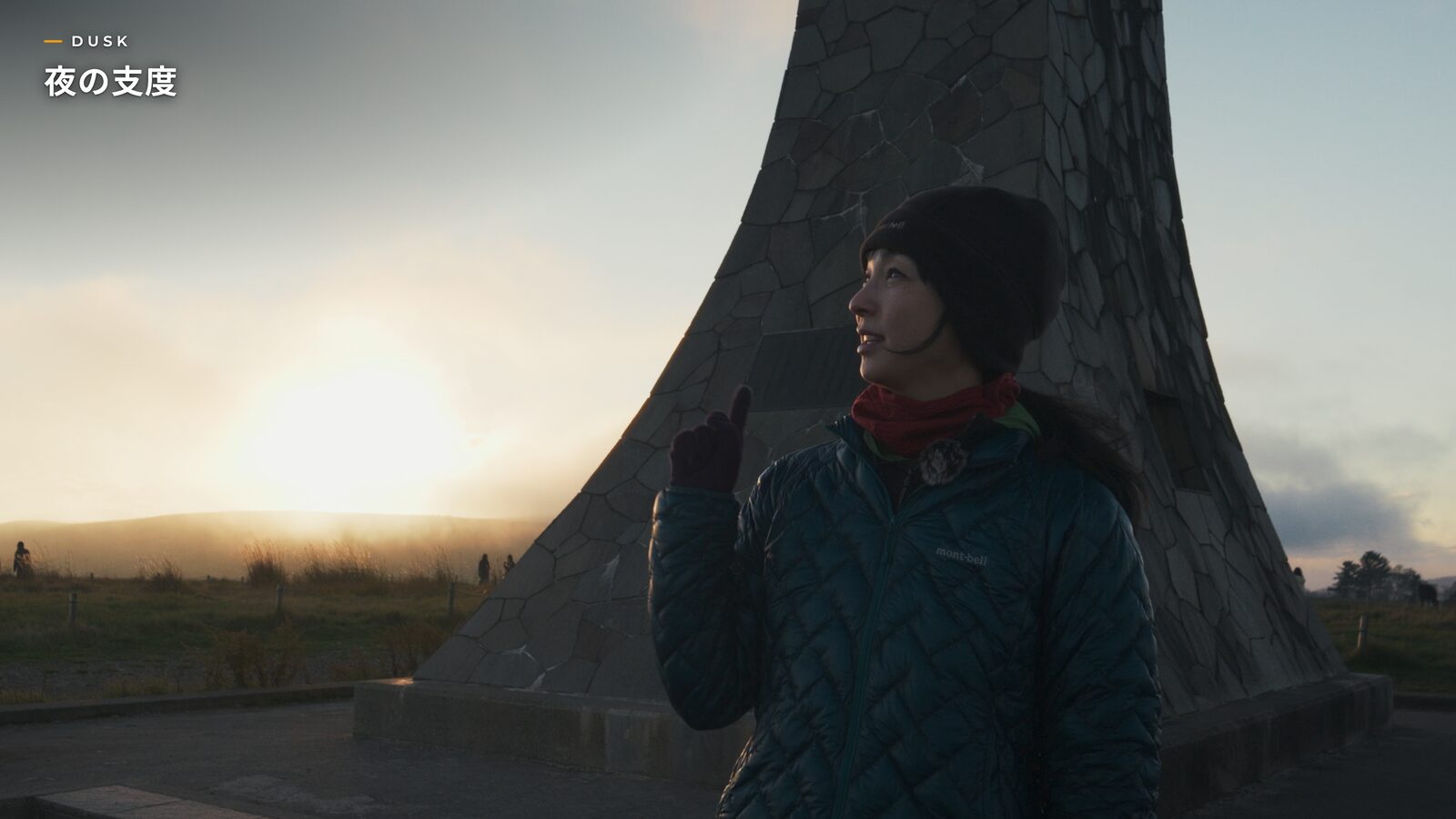
Then, right after sunset, fog rolled in and the sky turned completely white. The telescope couldn't find any stars, and I couldn't start shooting.
I kept waiting, and around 9 p.m. the sky began to clear. The fog broke up and the stars came out, with even the Milky Way showing in the photos. It was the moment I was really glad I hadn't packed up.
The first frame is grainy
The Andromeda Galaxy was high in the eastern sky. It used to be called the "Great Andromeda Nebula", yet to the eye it's barely there.
Once the DWARF mini locked on, the first frame was all grain. It kept adding frames of about 15 seconds each, little by little.
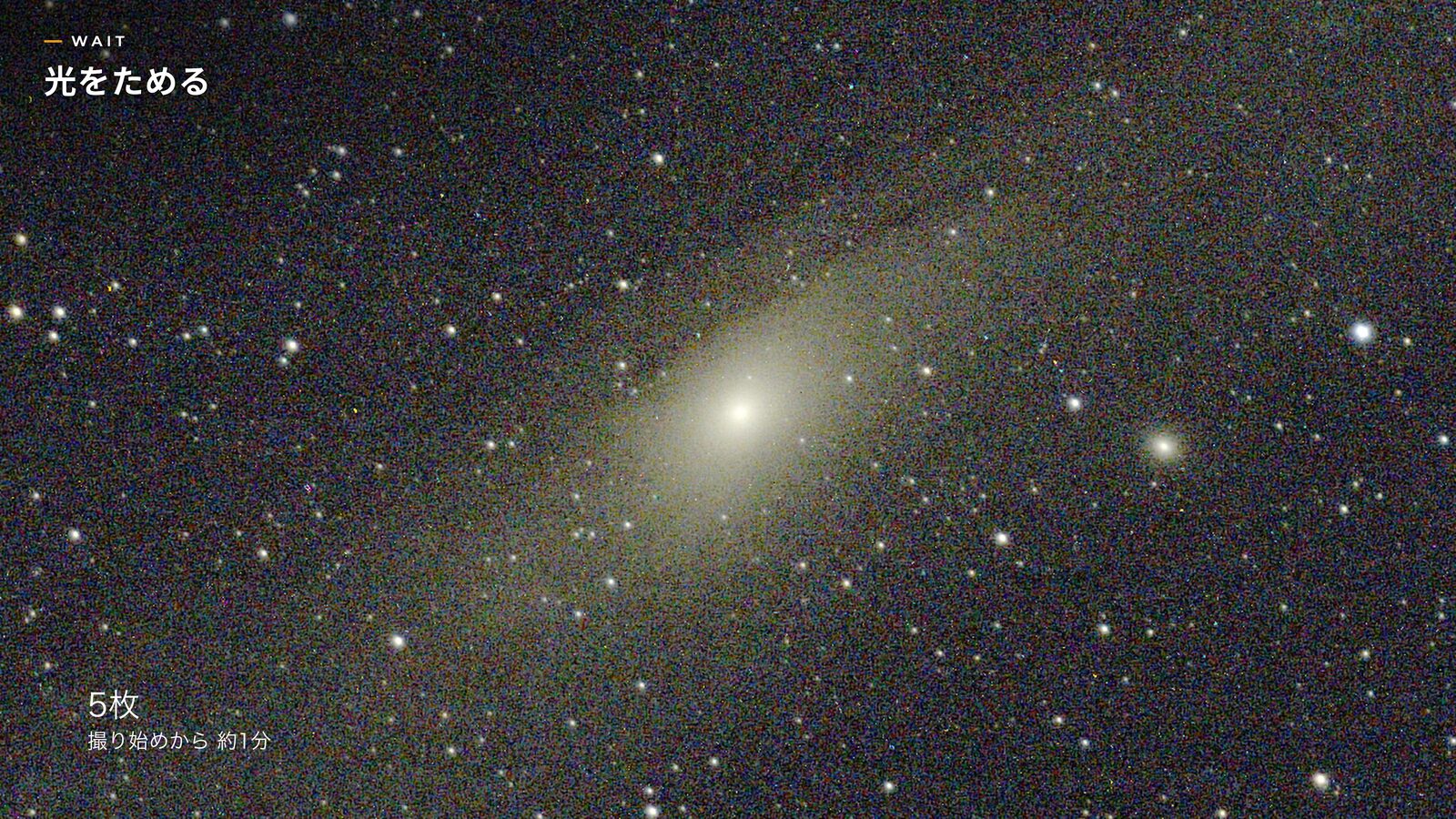
279 frames later, the galaxy appeared
In the end I kept shooting for about an hour and a half and packed up after 10 p.m. The total was 279 frames, or roughly 70 minutes of combined exposure.
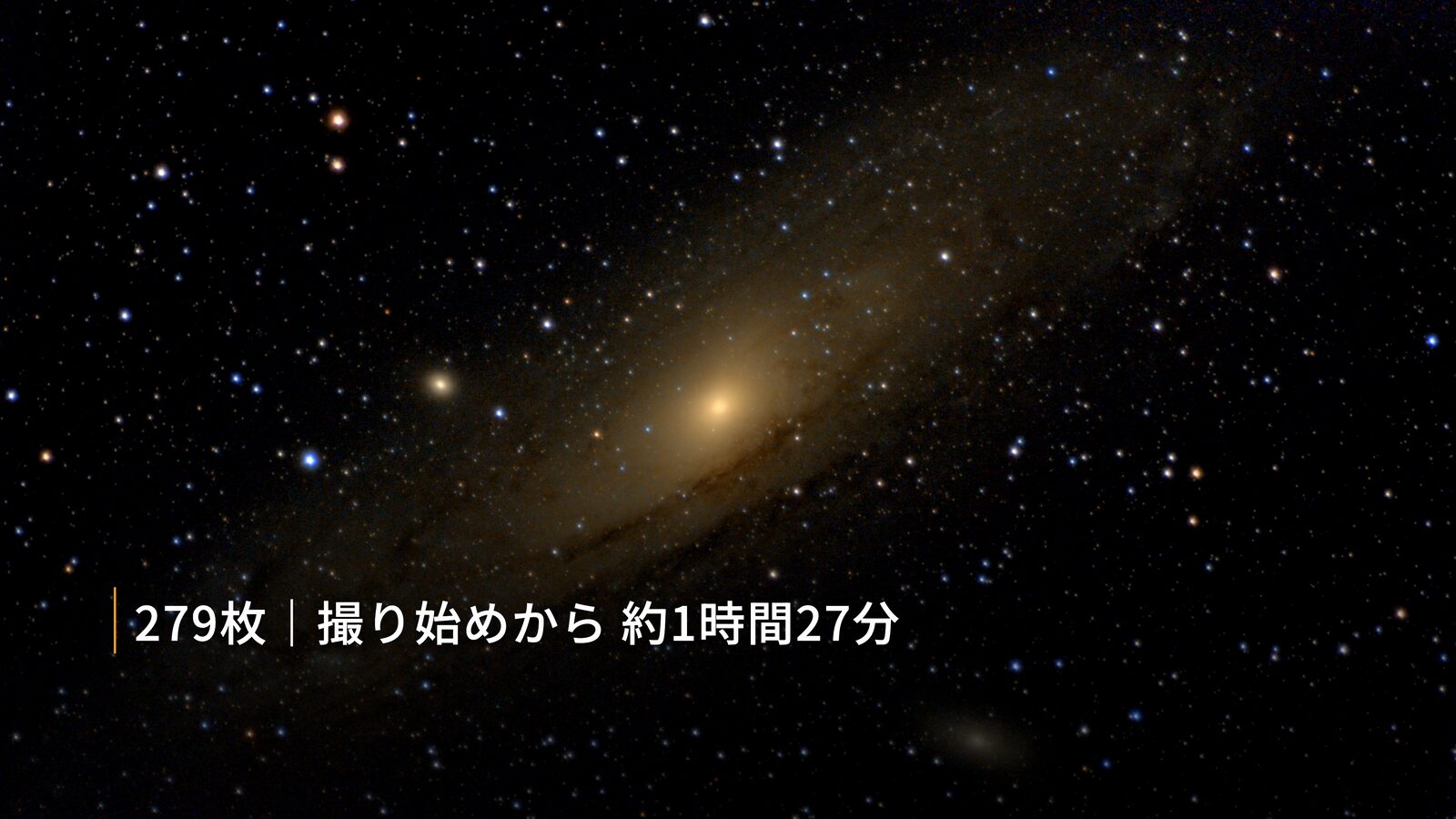
The DWARF mini has a narrow field of view, and the Andromeda Galaxy is too big to fit entirely. In photos it spans about six full Moons side by side. Something that large, and you can hardly see it with your eyes.
The Andromeda Galaxy is about 2.5 million light-years away. The light on that screen left the galaxy roughly 2.5 million years ago, and the telescope collected it 15 seconds at a time, 279 times over.
What I learned
What I liked
- You can reach your target without knowing the constellations. It finds, tracks and stacks for you
- It's light enough to carry. At 840 g, it comes along to mountains and plateaus
- You can watch the progress on your phone. Seeing the image improve with every frame is genuinely fun
What was hard, and what to watch out for
- You can't beat a bright sky or bad weather. Nothing from Tokyo, and even at Utsukushigahara I couldn't start until the fog cleared
- It takes time. Plan on waiting an hour or more for a clean result
- Large objects don't fit. Part of the Andromeda Galaxy is cut off
- High plateaus get cold at night. It was 8°C by 5 p.m. in October. You'll be standing around a lot, so bring extra layers
Wrapping up
The sky looked exactly the same as when I arrived. But now I knew what was out there. That's how the DWARF mini changed the way I look at the night sky.
If you don't know much about stars, being able to meet a galaxy just by choosing it on your phone and waiting is a special experience. Find a dark sky, give yourself time to wait for clear weather, bring warm clothes, and give it a try.
DWARF mini Smart Telescope (840 g, 30 mm aperture) – DWARFLAB official store
Discount code: YOSHIMIDWARF
If you had a smart telescope, what would you shoot first: the Moon, Saturn, or a nebula? Let me know in the video comments.
Note: This article is based on a video made with a DWARF mini provided by DWARFLAB. Weight and aperture are as listed at the time the video was published. Capture data: October 7, 2026, Utsukushigahara Plateau, Nagano / DWARF mini (telephoto), 15 s exposures, gain 60, 279 frames stacked (shot 20:49–22:16 JST).
Note: The product link is a DWARFLAB official store affiliate link. If you buy through it, Yoshimi Iwasaki receives a referral fee.
Related posts

A 2 a.m. Night Hike up Takaosan | Trail 1 to Sunrise, Down via the Jataki Route

WUBEN G5 Honest Review | Can a 52 g Keyring Light Get You Up a Mountain After Dark?

Norikuradake Day Hike | A Bus to 2,702 m, and an Honest Report from Kengamine, Japan's Easiest 3,000 m Peak

4 Montbell Autumn and Winter Outfits | Outdoor Clothing That Doesn't Look Out of Place in Town
Enjoyed this? Subscribe on YouTube.
Honest reviews of hiking gear and apparel, plus hiking vlogs from Japan — new videos every week.
▶ Subscribe on YouTube →Brands: for video production and wear-test enquiries, get in touch →
This post contains affiliate links. Prices and specifications are as of the video's publication date. Most items are sold in Japan.