Blog
Why Montbell Isn't Raising Prices | I Asked, at the 2026 Fall/Winter Launch
2026.08.07
In a year when every headline is about prices going up, several pieces in Montbell's 2026 fall/winter line cost less than they did last year.
Not because something was taken out, either. The contents are better. I was invited to the press launch for the new season, and honestly, the products interested me less than one question: how is this price still possible?
So I asked, right there on the floor. The answer turned out to be five years long.
A down parka with better fill — and ¥2,500 off
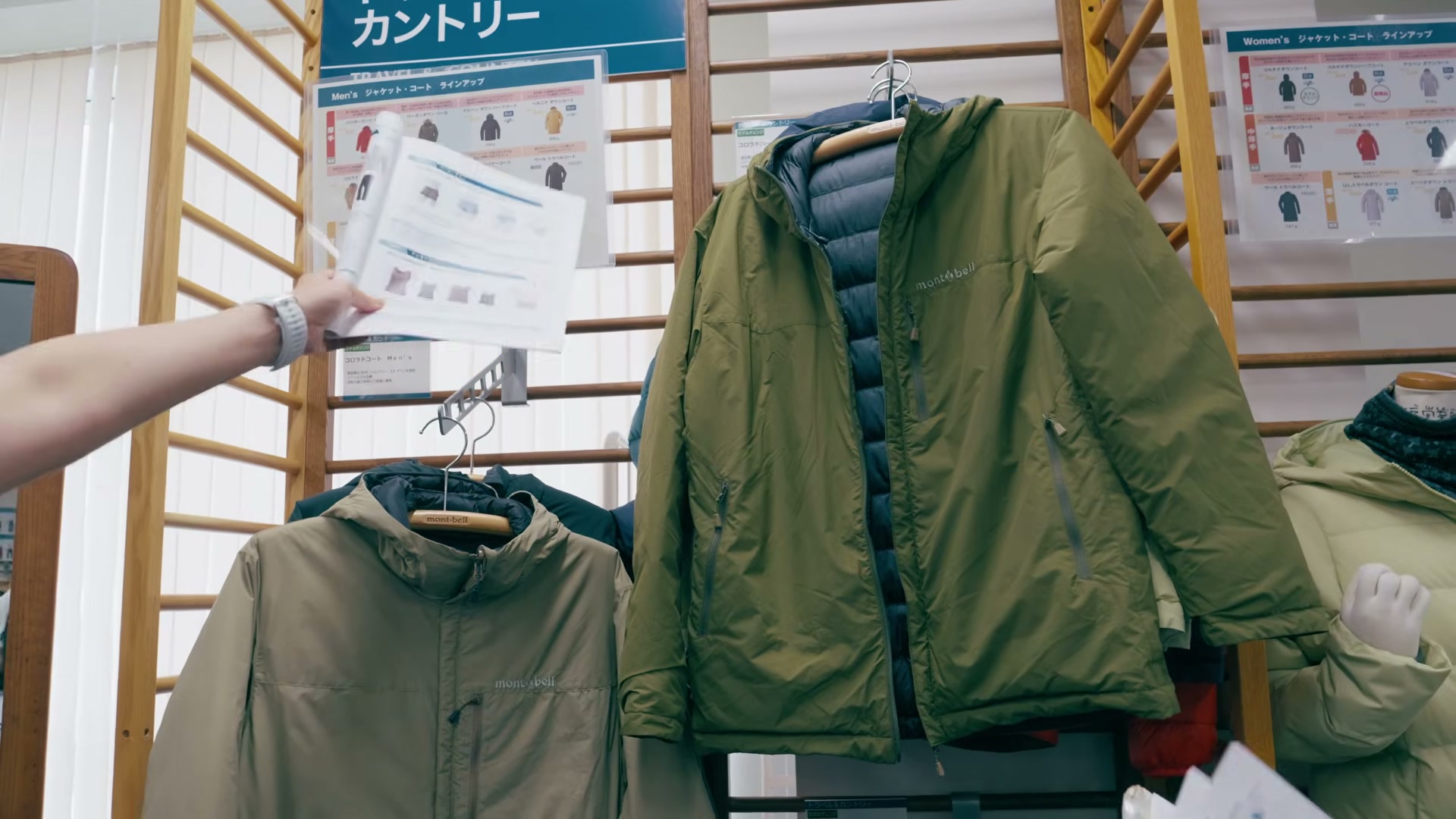
The clearest example was the Colorado Parka, a reversible down parka (wearable inside out, so one jacket gives you two looks) that got a redesign this season.
What changed is inside. The fill power went from 650 to 800.
Fill power measures how much a given weight of down expands. Higher numbers mean less down is needed for the same warmth, so the garment gets lighter and slimmer. Going from 650 to 800 is a clear step up in grade.
Better contents should mean a higher price. Instead, it dropped by ¥2,500 — now ¥22,000 for women's, ¥25,000 for men's.
That doesn't add up, does it. I asked why on the spot.
For context: right now every input cost in the outdoor industry is moving in the wrong direction. Raw materials, shipping, the weak yen. On top of that, the whole industry is in the middle of switching away from certain chemistries for environmental reasons (more on that below), and development costs money too. The obvious move is to raise prices.
The answer was five years of quiet work
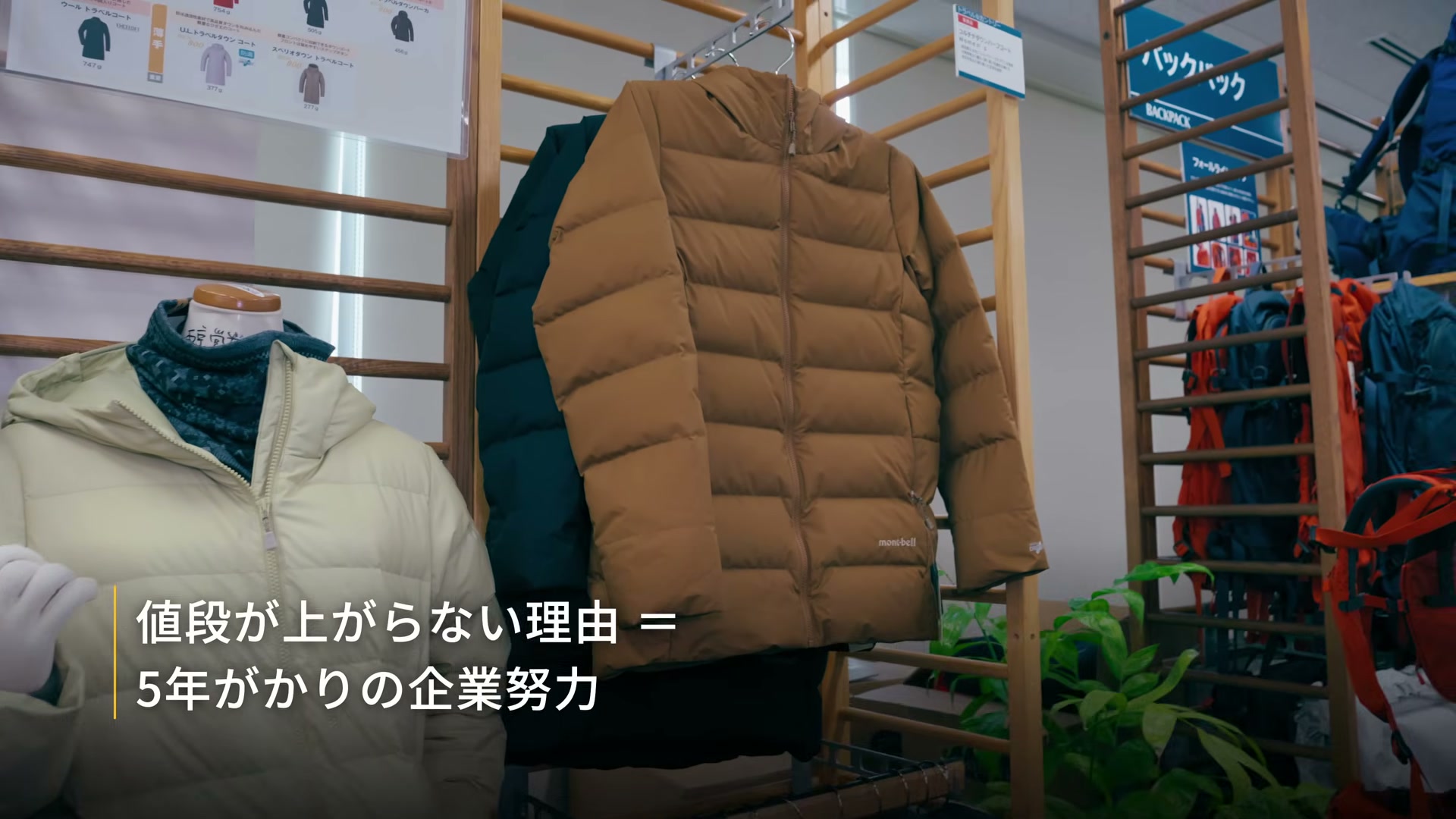
The short version: the way things are made has been changing, steadily, where customers never see it.
What stayed with me was how the staff member put it:
> "At the development level — we don't really go out of our way to tell customers this — but across most of our products there have been cost reductions, and things that were genuinely going to go up ended up staying flat."
I assumed this meant a handful of items. It's most of the line. When I asked how long this had been going on, the answer was "about five years." That's well before rising prices became daily news.
And they don't advertise any of it.
To be precise, though: it isn't that most products got cheaper. Mostly, things that should have gone up didn't. Personally I find that the more impressive version of the story.
Performance hasn't been cut to get there — the method of making has changed instead. The hood adjustment, they told me, is actually better than before.
Not in the catalogue #1: the zipper that stops sliding down
Two things came up that appear nowhere in the catalogue or on the website. I only learned them because I could ask in person.
This season the Cortina line gains the Cortina Down Half Coat (¥29,500), a shorter women's cut. Until now the line only went to below-the-knee, so this adds a length that covers the hips.
While we were talking about it, the conversation turned to the zipper on long down coats.
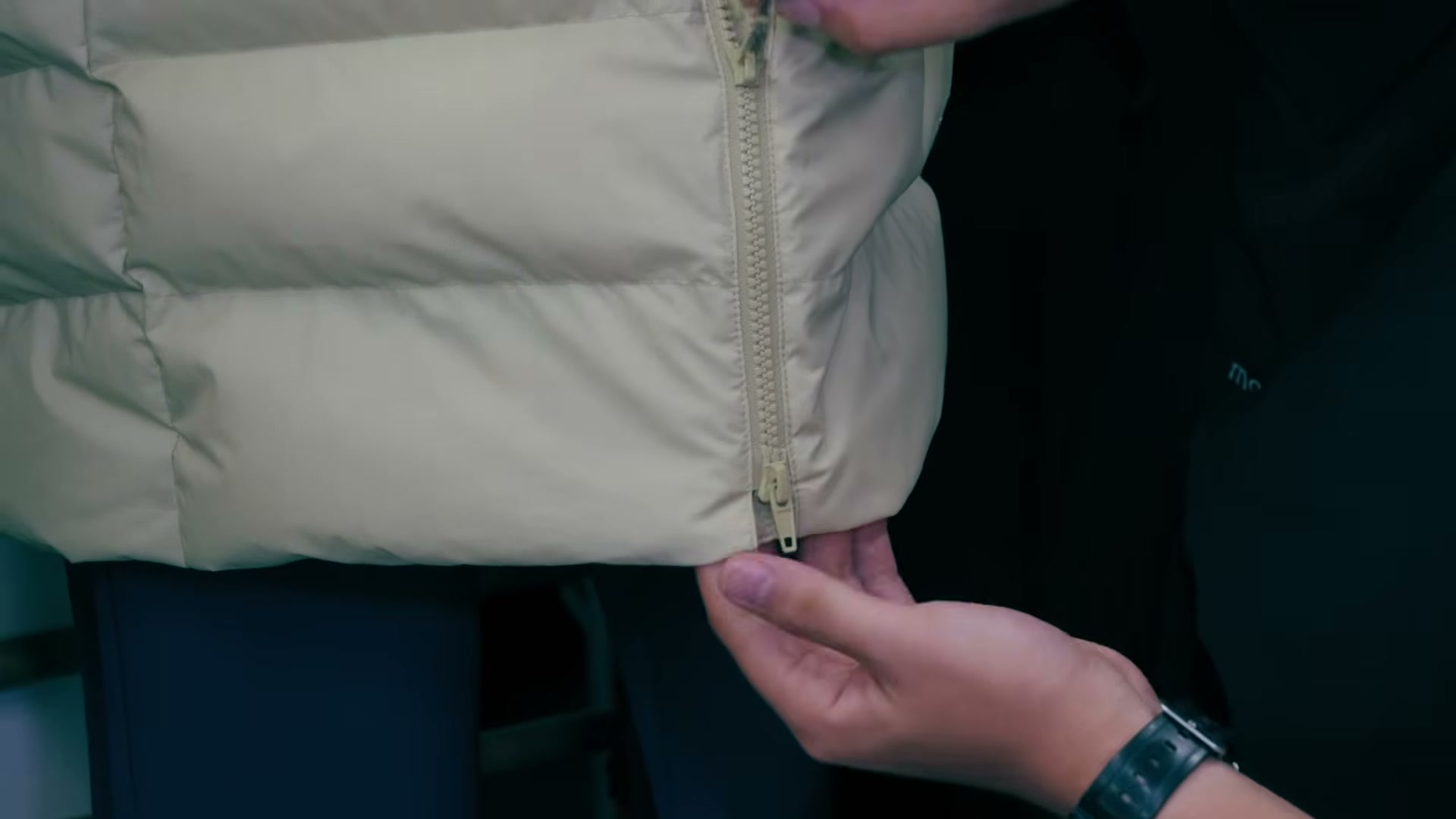
Long coats use a double-slider zipper — two pulls, so you can open from the bottom as well as the top. And the lower slider has a habit of sliding down on its own the moment you let go, doesn't it.
It's fiddly. People force it and break it. That complaint came most often from older customers.
I'd felt the same thing myself, wearing a coat with that kind of zipper.
So the lower slider was reshaped — a specific profile that resists sliding when you release it.
None of this is printed anywhere. "We mention it to the people who ask," they said, smiling.
Not in the catalogue #2: light grey hides more than skin tone
The second one is about base layer colour.
When you wear something under a white shirt or blouse, do you reach for beige or a skin tone? Closer to your skin means less show-through. I believed that too, for years.
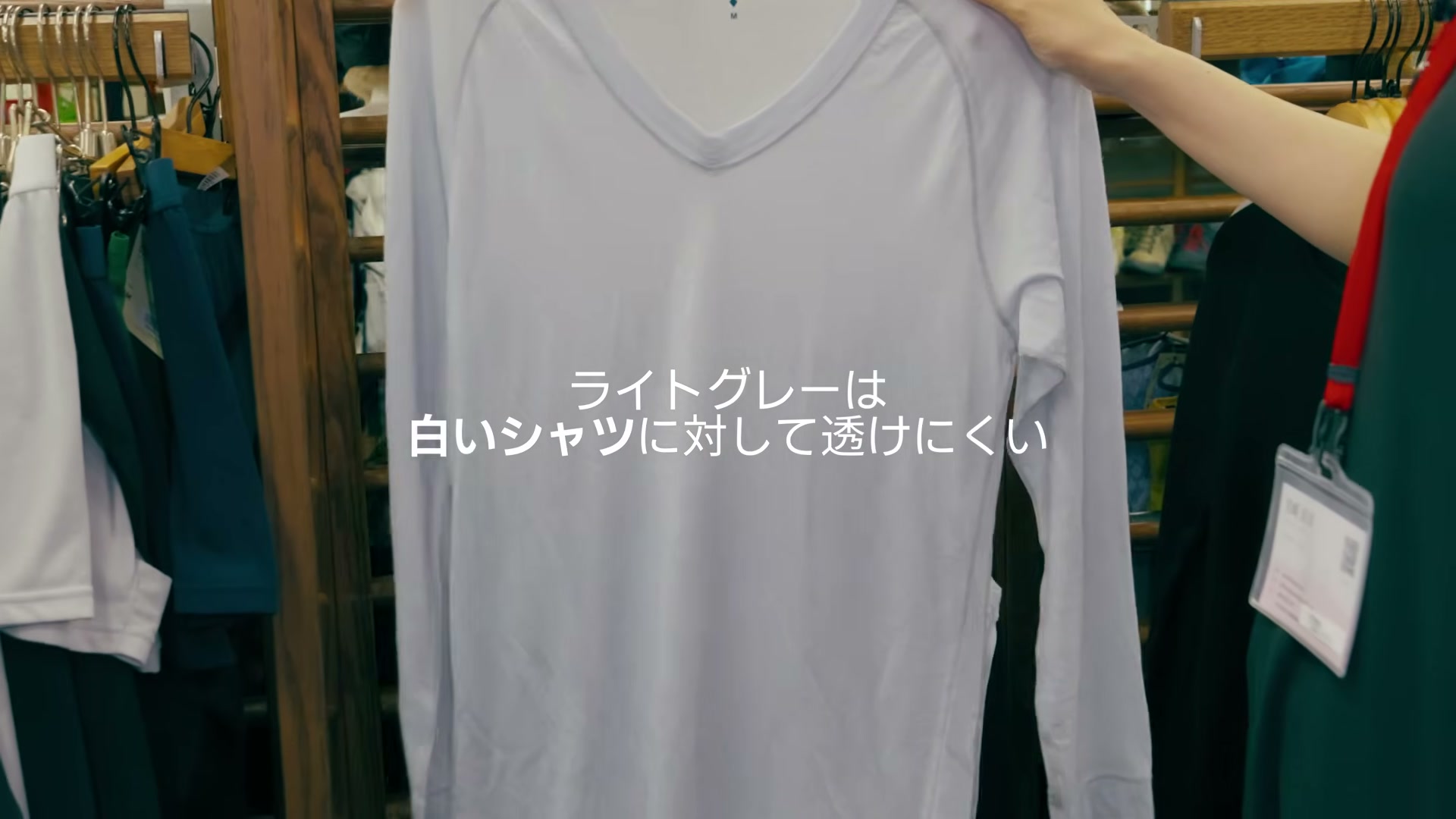
But three years ago Montbell tested this properly in-house, and the colour that shows through least is light grey.
The reason is that a skin tone sits slightly off from *your* particular skin tone, and that small mismatch is exactly what makes the outline visible. Black and navy are dark enough that they show through the other way. Light grey doesn't so much hide as stop drawing your eye to it.
So the light grey running through Montbell's base layers isn't a styling choice. There's a reason for it.
That said, beige isn't off the table — a beige with a little pink in it does resist show-through, and they make both deliberately.
Repair as a normal option, not a last resort
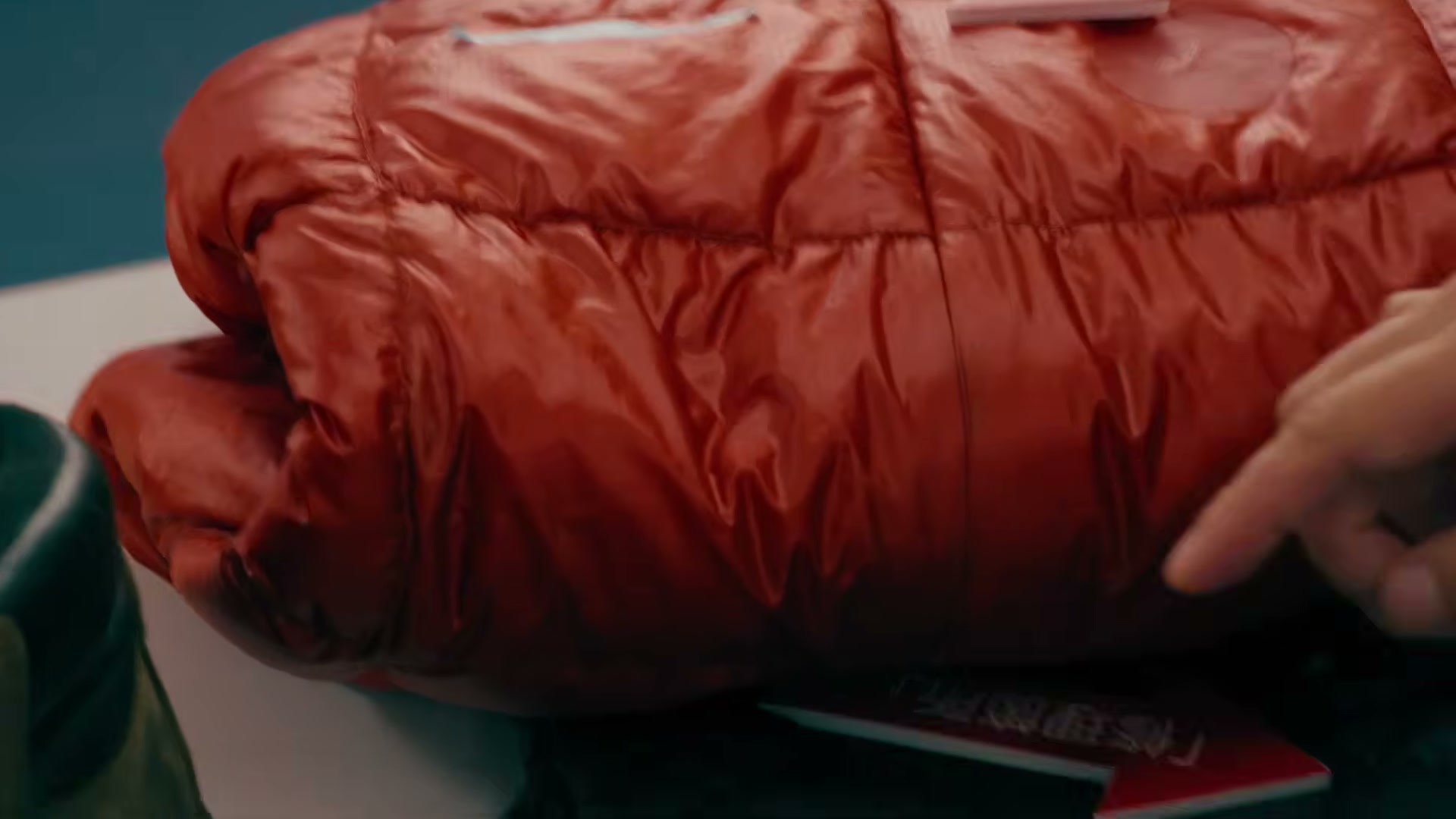
This surprised me: Montbell repairs in-house, in Japan.
There's a central facility in the Hokuriku region, so turnaround is relatively quick. You can drop items at any of their 130-plus directly-run stores — hand it over the counter, that's it. It doesn't have to be the shop you bought it from.
One caveat: their site lists four to six weeks from intake to return, so it's worth sending things in before the season starts rather than during it.
They showed me repaired pieces. "Can you tell where this was fixed?" — I genuinely could not. Down jackets, rain shells, with the seam tape (the strip that seals stitch holes against water) reapplied, returned to normal wearable condition.
Which raises an obvious question.
Keep prices down, and repair things so they last longer. That means people buy new gear less often, doesn't it.
When I put that to them, the answer came with a small laugh — "we're a strange company":
> "If you maintain things, they last a really long time. And then people don't buy new ones so often. We want them used for a long time."
A lot of people there love the outdoors, they said. That stayed with me.
There's a reason your shell stopped beading
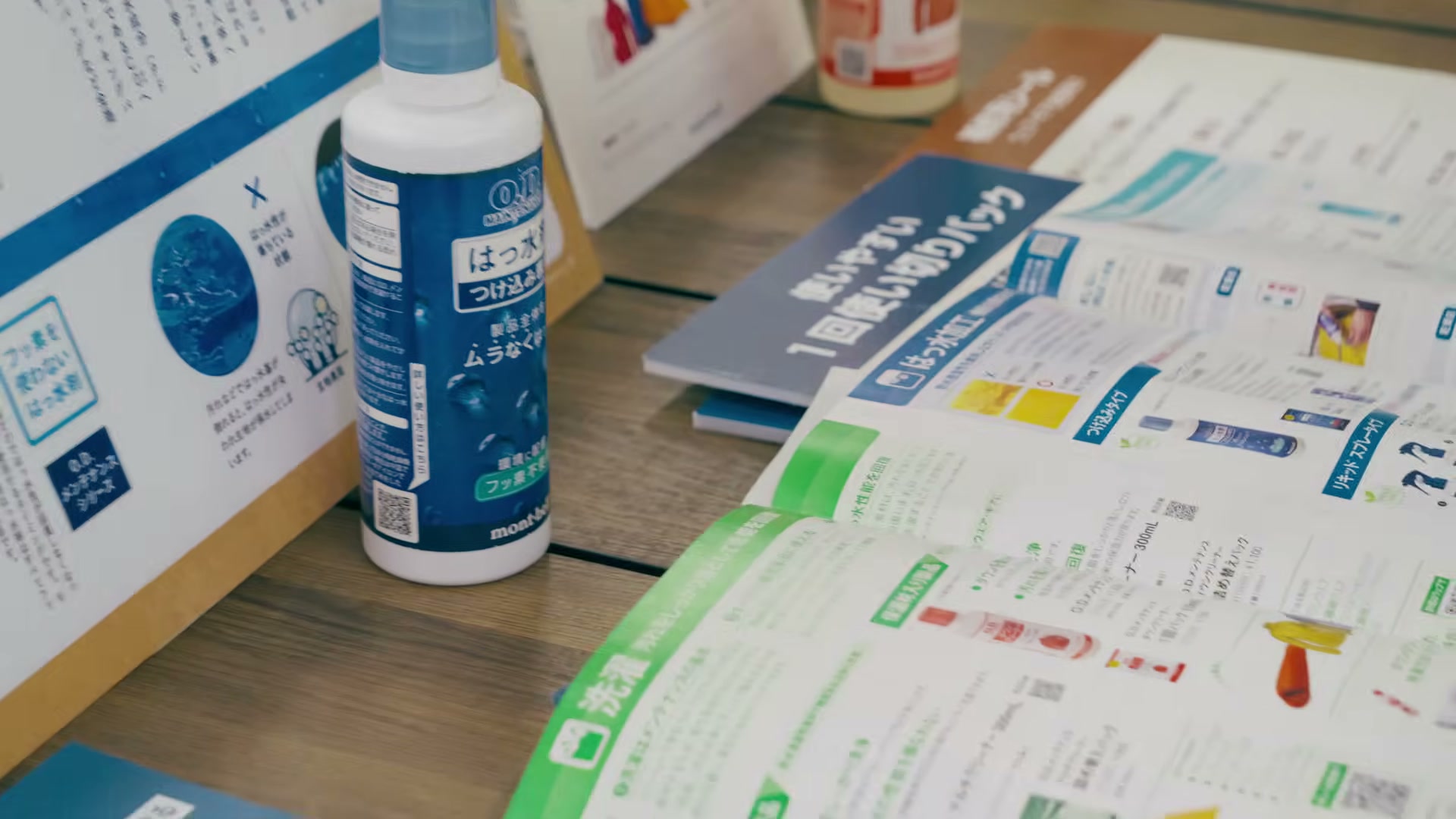
Have you noticed your rain jacket repelling water less well than it used to? Water used to bead and roll off; now the fabric wets out and goes dark.
That may not be your fault.
The outdoor industry is mid-transition away from fluorine-based water-repellent treatments. Some countries have already restricted them by law. Montbell has been switching over since about two years ago.
Environmentally, this is the right call. But water repellency does drop somewhat.
They said so plainly — a performance trade-off accepted for environmental reasons — and then added: *which is exactly why maintenance matters more than it used to.* I appreciated that they led with the downside.
How to keep it working
Here's the part most people don't know: Montbell down can go in a washing machine. It sounds like a high-stakes operation, but in a mesh bag it's fine.
What they pushed hardest was drying with heat. Even when the shell feels dry, damp fill clumps, and that's what causes mildew and odour. Heat also restores water repellency.
Care labels differ by product, though, and some can't be tumble dried. Check the tag first.
For re-proofing, soak-in products beat sprays, because you can finish with heat. For small items a hairdryer works.
If buying detergent is a hassle there are single-use packs, and if even that's too much, there are laundromats running a Montbell water-repellent cycle — wash, dry and re-proof in one go. The number of locations is growing.
The new pieces started as somebody's request
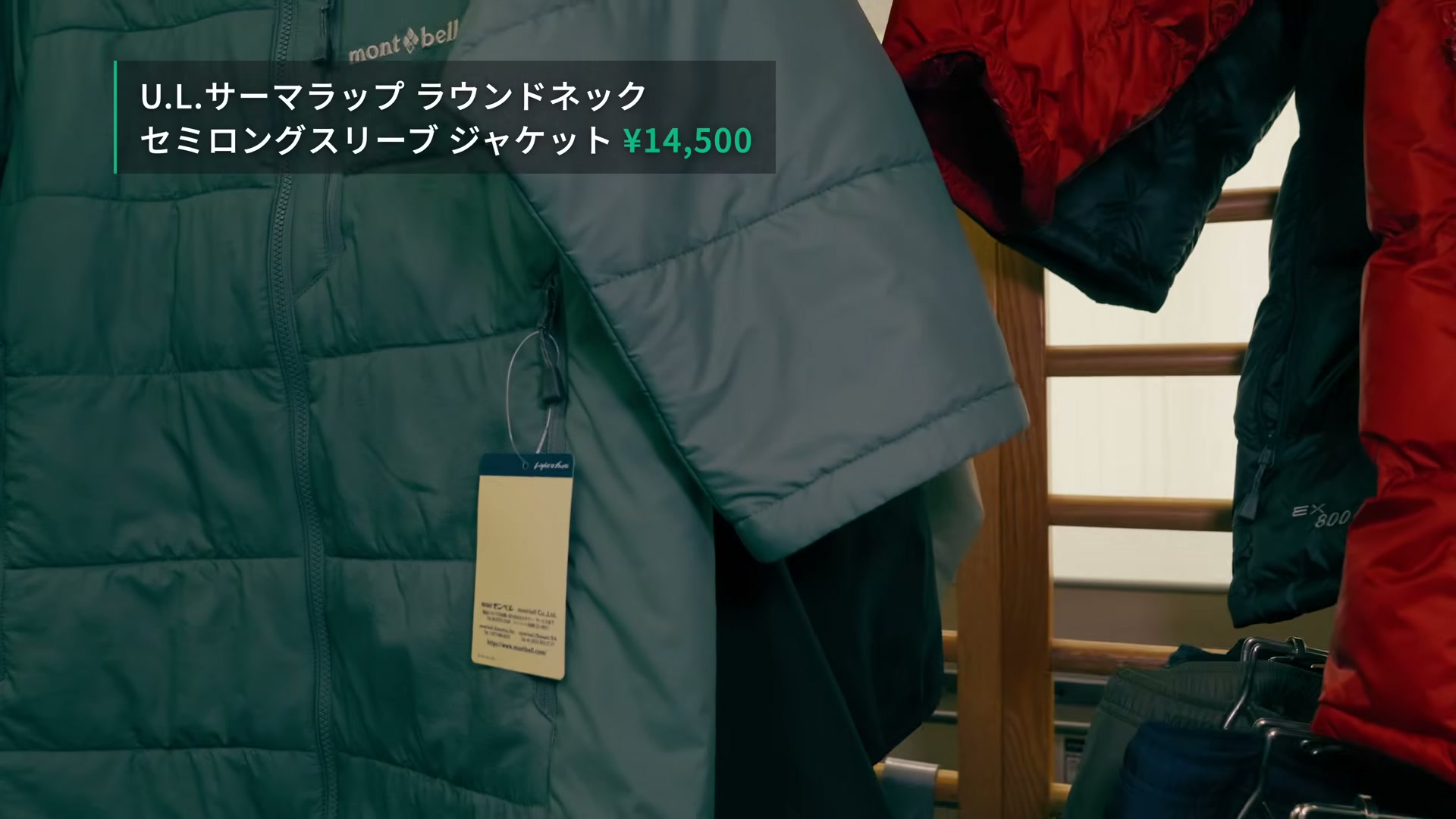
Here's the lens I'd suggest for the new line, rather than just a list of products.
Trace back why each new piece exists and you find a request behind it. And often it didn't come from a hiker.
Montbell makes a short-sleeved insulated jacket, which sounds like a contradiction. It exists because a tofu maker asked for one. Working with water all day means long sleeves get soaked — but short sleeves are cold. That request became a product.
This season it goes a step further with a three-quarter length (U.L. Thermawrap Round Neck Semi-Long Sleeve Jacket, ¥14,500). Think about how many times you push your sleeves up while washing up at home. This removes that.
The fabric is merino wool, which resists odour well enough that a morning's sweat doesn't announce itself by evening — genuinely useful if you're in a suit all day.
The seven-eighths version came from a different complaint: "I like it, but it sticks out past my shirt cuff and looks wrong." That one came from office workers.
The piece that surprised me most was the Snake Guard Gaiter (¥12,600) — a shin wrap that protects against habu, a venomous pit viper found in parts of southern Japan. People living in habu territory asked for a cover that snakes can't bite through. It's made with Italian leather.
They answer even that. At this point it's less an outdoor brand than a tool shop for people who work outside.
The pick of the season: CLIMAAIR Light
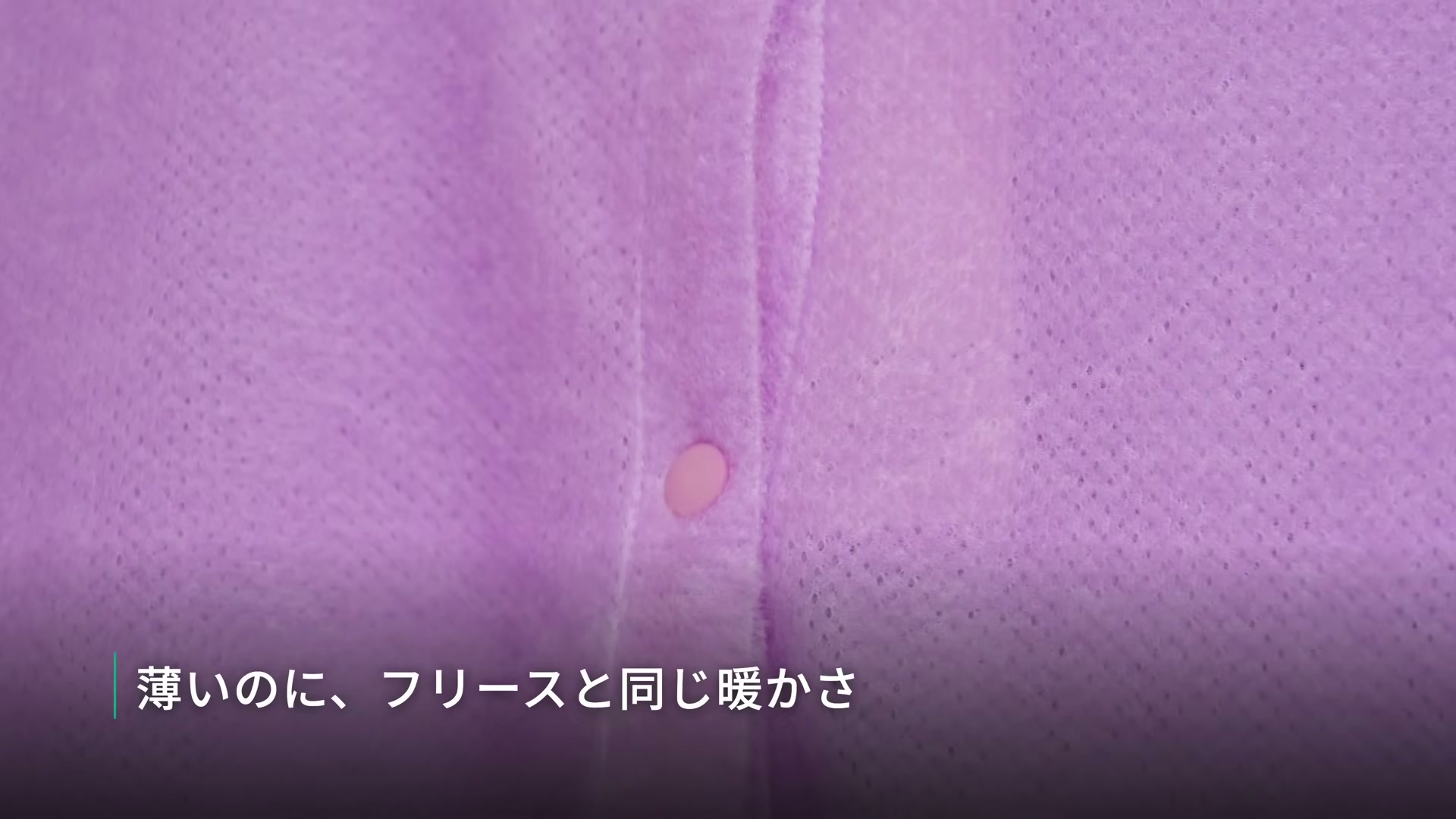
When I asked what they'd single out this season, the answer was a new fabric: CLIMAAIR Light.
The first thing you notice is how thin it is — you can see through it. Yet with no wind it's about as warm as Chameece, their long-standing fleece. The trick is fibre length: longer fibres trap more air between them, so it stays warm while staying thin.
Then the weight. The long-sleeve is 102 g — about two eggs. Lighter than an ordinary long-sleeved T-shirt. It's ¥4,200 (¥4,000 women's).
As a layer you throw in a bag and forget about, that's hard to beat: air conditioning in the office, or stuffed into a gap in your pack as insurance on the mountain.
The catch is wind. All that breathability means it doesn't block any. On windy days, plan on a windproof layer over it — a shell, in outdoor terms.
What's new, for town and for the mountains
From what I saw, with prices:
For town
- CLIMAAIR Light Long Sleeve T | ¥4,200 (men's) / ¥4,000 (women's)
- Colorado Parka | ¥22,000 (women's, reversible, 800 FP)
- Cortina Down Half Coat | ¥29,500 (new)
- 3-in-1 Frost Down Parka | ¥36,000 (women's) — the popular synthetic version now has a down option
- Neige Down Jacket | ¥23,100 / Vest | ¥19,200
- U.L. Thermawrap Semi-Long Sleeve Jacket | ¥14,500 (three-quarter sleeve)
For the mountains
- 3-in-1 Trail Shell Jacket | ¥14,000
- Neige Walker with Gaiter | from ¥23,700 — glass fibre in the outsole, the same principle as winter tyres
- Alpine Cruiser 3000 Leather | from ¥53,700 — serious winter mountaineering boots, in a class that usually runs ¥80,000–100,000
- Aluminium Crampon 10 | ¥14,000 — light, but aluminium wears fast on rock; for snow-only use
- Light Alpine Snowshoe series | from ¥16,900
- Alpine Goggle Easy Change | ¥15,600 — lenses swap magnetically
One piece of advice from the day: choose gear after you've decided where you're going. Buying up the grade ladder before you know that is how things end up unused.
*All prices include tax, as of August 2026. In-store availability rolls out from September. Check the Montbell official web shop for current details.*
In short: the price holds for a reason
The detail that stayed with me longest was this — returned products are inspected by hand, one at a time, by the people who develop them.
Because someone looks at every single one, what customers say actually reaches the design. The three-quarter sleeve, the wool cuff length, the shape of a zipper slider: every one of them has a reason behind it.
At the end, after a pause, one of them said:
> "Mountain-grade specs have become so normal to us that we're not good at explaining them. Things built for the mountains turn out to be genuinely easy to live with day to day — and hardly anyone knows that."
The price holds because of five years of work. The zipper has a reason. They mean it about repairing things and keeping them in use.
Knowing that, the same jacket looks a little different in your hands.
---
The thing that surprised me most was not being able to find the repair. What surprised you? I'd love to hear it in the comments on the video.
*This article covers a press launch I was invited to attend. No payment was involved, and the manufacturer placed no conditions on what is written here.*