Blog
NEEWER LT39 Honest Review | The Four Shots a 1.2 kg Carbon Tripod Earns Its Place For — and Three It Doesn't
2026.08.14
Let me be honest with you: most of the time, you don't need a tripod. They're heavy, they're awkward, and I have left mine at home more times than I can count.
But there are shots where that stops being true. The few minutes when the colour of the sky shifts at dawn. A sky full of stars, which only exists at all in a long exposure. Those are shots where the subject is time itself, and no amount of holding steady will get you there. So I kept giving up on them, looking hard at the view instead, and walking on.
The NEEWER LT39 is the first tripod I've actually wanted to carry. It folds down to about 49 cm and weighs roughly 1.2 kg — small enough for a hiking pack or a travel bag.
Here's my conclusion up front: the LT39 is not a tripod you take on every walk. But on the days when there's a shot worth waiting for, it was the only one I wanted. Below are the four situations where it genuinely earned its weight, the three where I'd leave it behind, and one honest weakness — with the fix.
This tripod was supplied by NEEWER. Everything that follows is what I actually found using it on a beach at dawn and in a city at night, the good and the awkward alike. Where it loses to the obvious competitor, I've said so.
A tripod left at home doesn't score badly — it scores zero
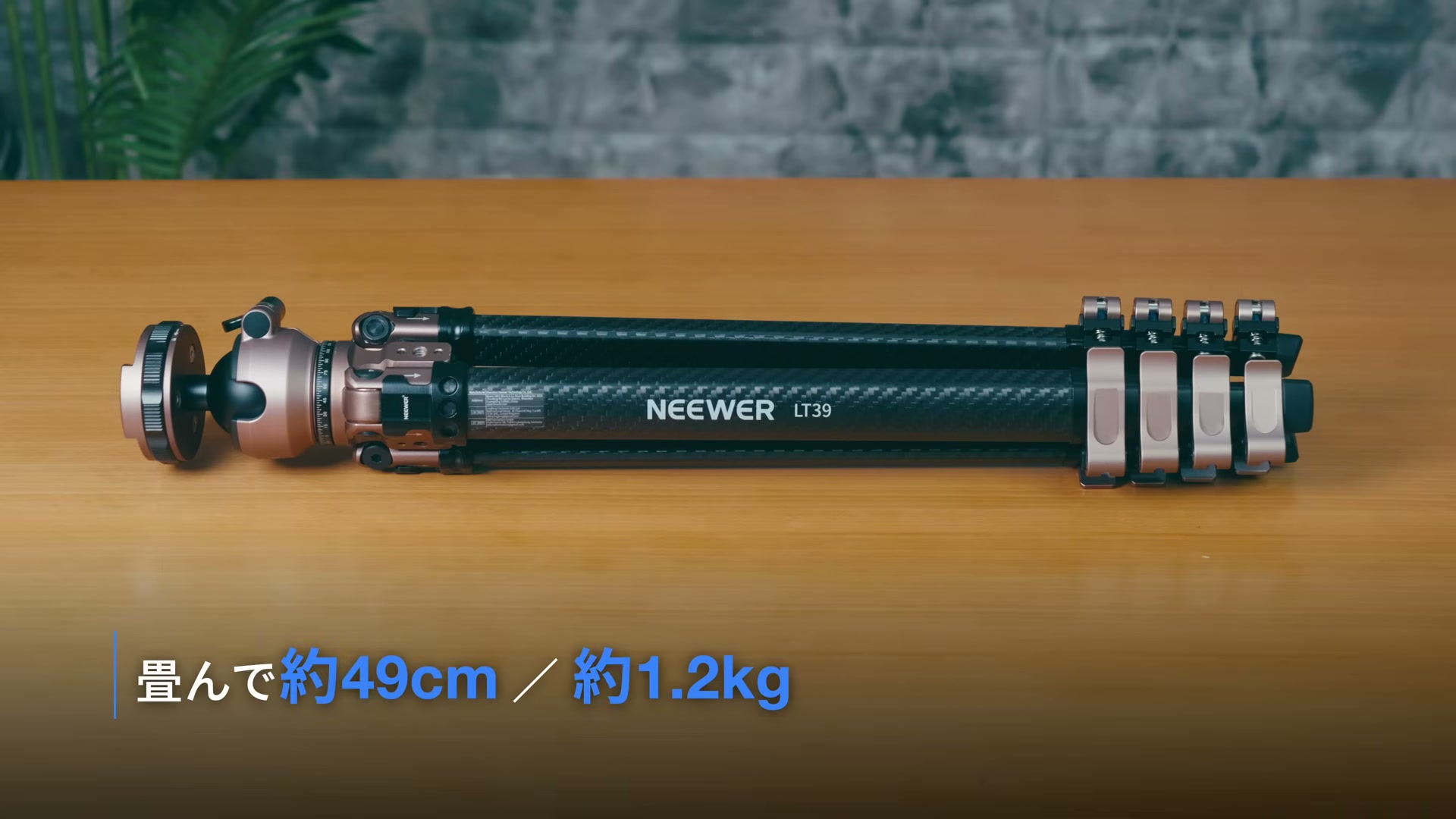
This is the single idea that governs how I choose camera support.
However good a tripod is, the one you left at home contributes nothing.
Rigidity, load rating, a buttery ball head — none of it matters if the thing stayed in the cupboard because it was too heavy to justify. A tripod that's slightly worse on paper but actually made it to the location is the only one that puts images on your card.
The night I shot the stars made that concrete. Had I only owned my heavier tripod, I would have left it behind — I know myself well enough to be certain of that. About 1.2 kg, 49 cm folded. That's the entire reason the footage exists.
NEEWER LT39 specifications
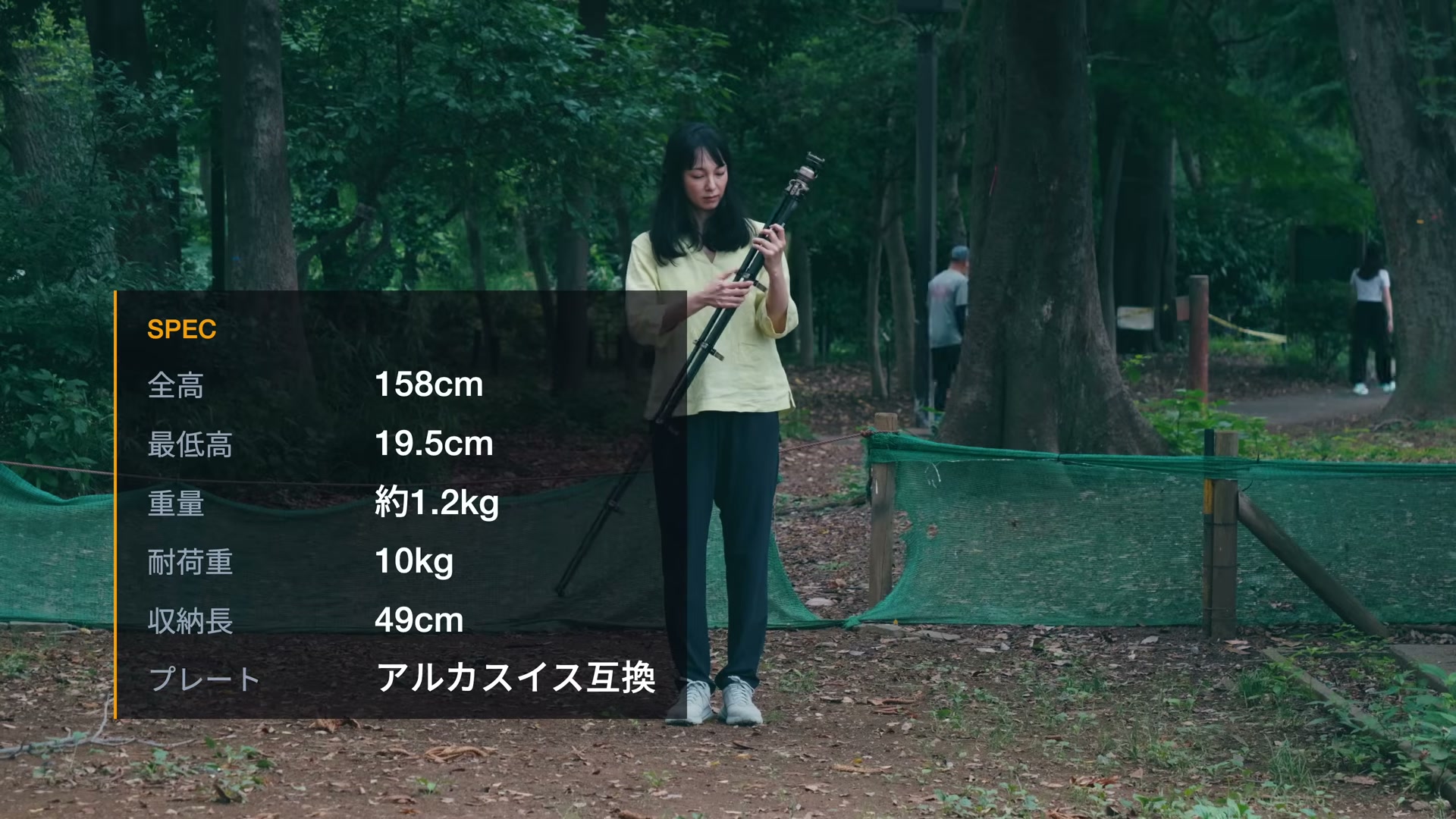
- Maximum height: 158 cm with the centre column extended. At my height that puts the camera right at eye level
- Minimum height: about 19.5 cm, using the supplied short column with the legs splayed
- Folded length: about 49 cm
- Folded diameter: 5.5 cm — narrow enough to slide down the side of a pack
- Weight: approx. 1.2 kg
- Load rating: 10 kg
- Material: carbon fibre
- Head: ball head, with an Arca-Swiss compatible plate
- Leg angles: three positions
- Centre column: long and short columns both supplied
- Price: ¥47,999 at the time of filming (manufacturer's price)
The number that quietly impresses is the ratio: roughly 1.2 kg of tripod rated to hold 10 kg. A mirrorless body with a telephoto lens is 2–3 kg, so there's a great deal of headroom.
The ball head moves without the stiction you sometimes get at this price, which makes small compositional adjustments easy. The Arca-Swiss plate matters more than it sounds: it means you can drop the camera straight onto another maker's head or clamp. NEEWER state compatibility with Peak Design's V3 plate specifically. The supplied case is also a genuine case rather than a token bag — the fabric has some substance to it.
Against the Peak Design Travel Tripod: where it wins, where it loses
At this size, the inevitable comparison is Peak Design's carbon Travel Tripod (TT-CB-5-150-CF-1). The video covers the headline; here are all the numbers.
| | NEEWER LT39 | Peak Design Travel Tripod (carbon) | |---|---|---| | Price | approx. ¥48,000 | approx. ¥110,000–123,000 | | Max height | 158.4 cm | 152.4 cm | | Min height | 19.5 cm | 14 cm | | Folded length | 49 cm | 39.1 cm | | Folded diameter | 5.5 cm | 7.9 cm | | Load rating | 10 kg | 9.1 kg | | Leg sections | 4 | 5 |
Prices are Japanese retail as checked in August 2026. I've deliberately left weight out: published figures for both tripods vary between sources, and the difference is small enough to disappear inside that variation.
The LT39 wins on price, height, load rating and folded diameter. The price gap is around ¥60,000 — less than half the money.
It loses on two counts, and both are real. The first is folded length: 49 cm against 39.1 cm. Ten centimetres matters if you're fitting a tripod into carry-on luggage.
The second is minimum height — 19.5 cm against 14 cm. Peak Design is genuinely better for low-angle work. I describe the LT39's 19.5 cm as "almost at ground level" in the video, and it is low, but if we're putting the two side by side then this column belongs to Peak Design and I'd rather say so plainly.
Set against that, the LT39 is notably slimmer folded (5.5 cm against 7.9 cm). For sliding into the side pocket of a pack, girth can matter more than length. Which of those two constraints binds harder depends entirely on how you carry it.
Shot 1: Sunrise and dawn colour
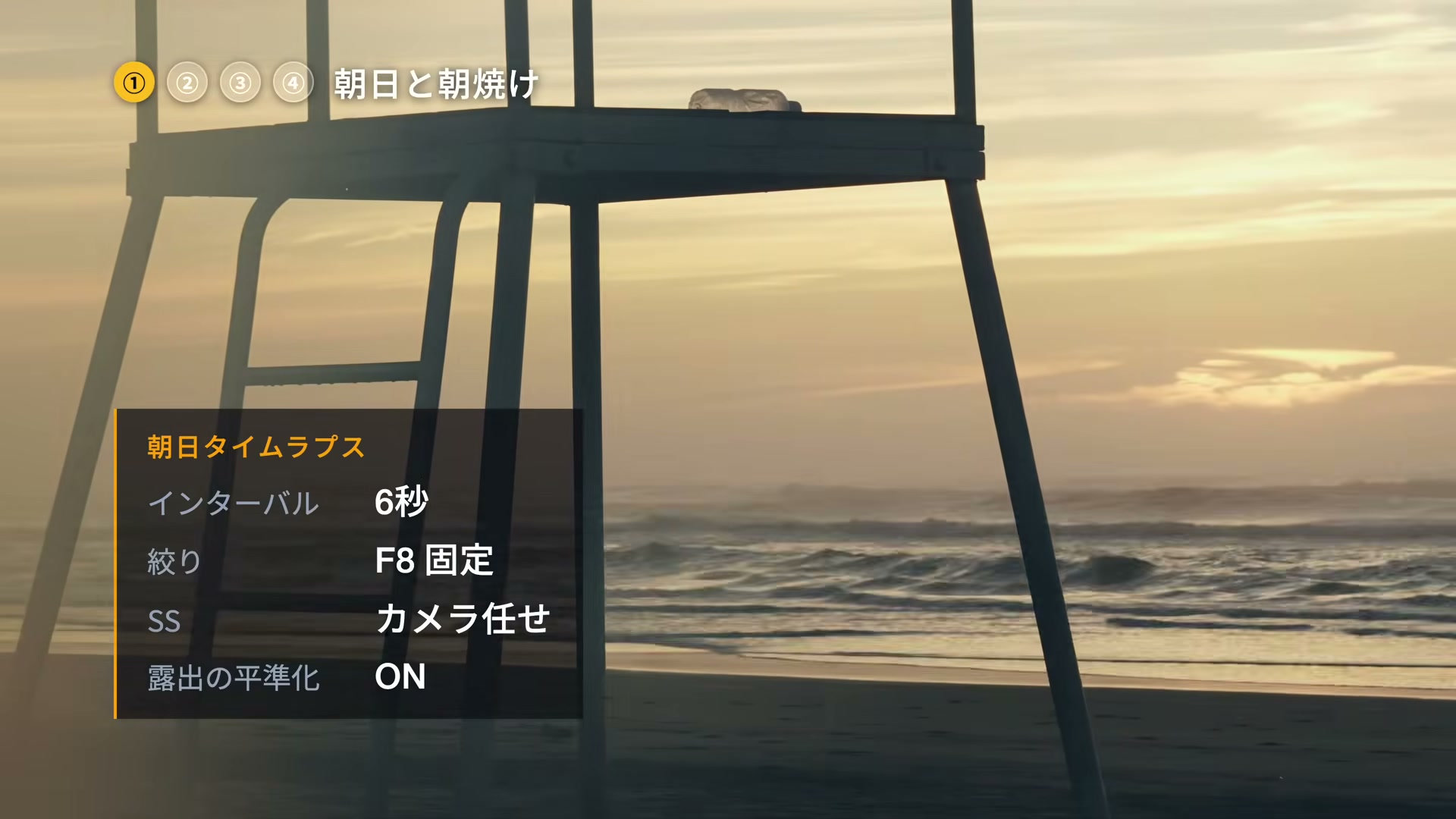
So — the four situations where I found a tripod genuinely necessary.
The first is sunrise and the colour before it. The sky takes anywhere from a few minutes to a quarter of an hour to change, and with a tripod you can commit the whole of it to a timelapse.
What makes this the most reliable of the four is that it doesn't depend on the moon. Star photography wants a new moon; dawn colour doesn't care. Any clear morning will do, which means far more chances to shoot.
My settings (sunrise timelapse)
- Interval: 6 seconds
- Aperture: fixed at f/8
- Shutter: let the camera decide (aperture priority)
- Exposure smoothing: ON
That last one is the setting that makes or breaks the sequence. Without exposure smoothing, the footage stutters as the scene brightens. The sky is getting lighter frame by frame, the camera re-meters each shot, and every one of those small steps becomes a visible flicker. Smoothing averages across neighbouring frames and the transition becomes continuous.
Shot 2: Stars
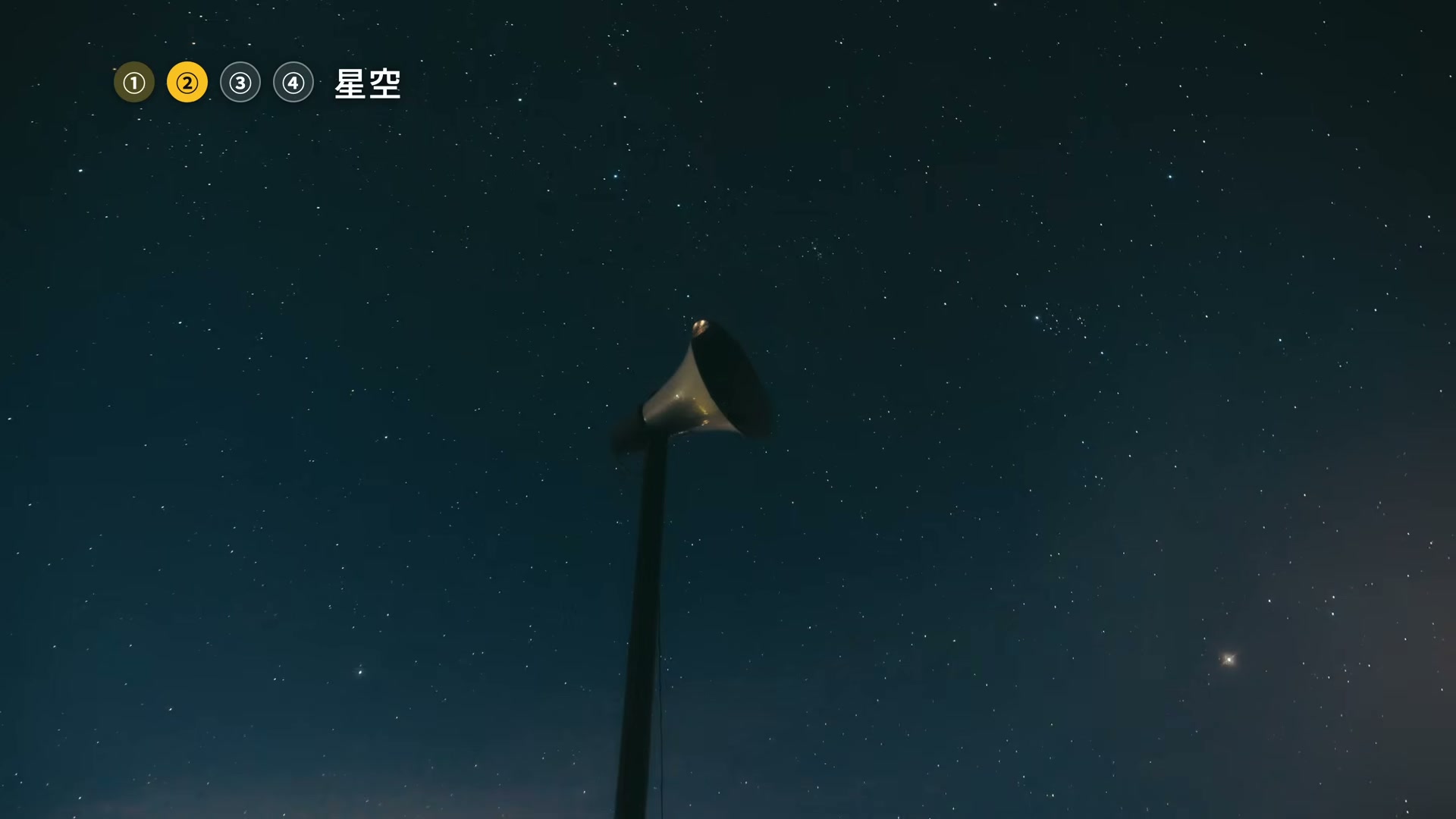
The second is the night sky, which is simply not available handheld. It exists only in a long exposure.
This is also where the tripod's real quality showed up, and it isn't a number on a spec sheet. It was there. With a heavier tripod, that night would have been another one where I left it behind.
My settings (stars)
- Shutter: 15 seconds — open it much longer and stars stop being points and start being trails
- ISO: 1600
- Lens: 24 mm equivalent, wide open
- Long exposure noise reduction: OFF, always
Again, the last item is the one that catches people out. With long exposure NR enabled, the camera spends as long processing each frame as it did exposing it. A 15-second exposure becomes 15 seconds of waiting afterwards, and interval shooting simply cannot function. Turn it off before you start.
Shot 3: Night cityscapes and long exposures
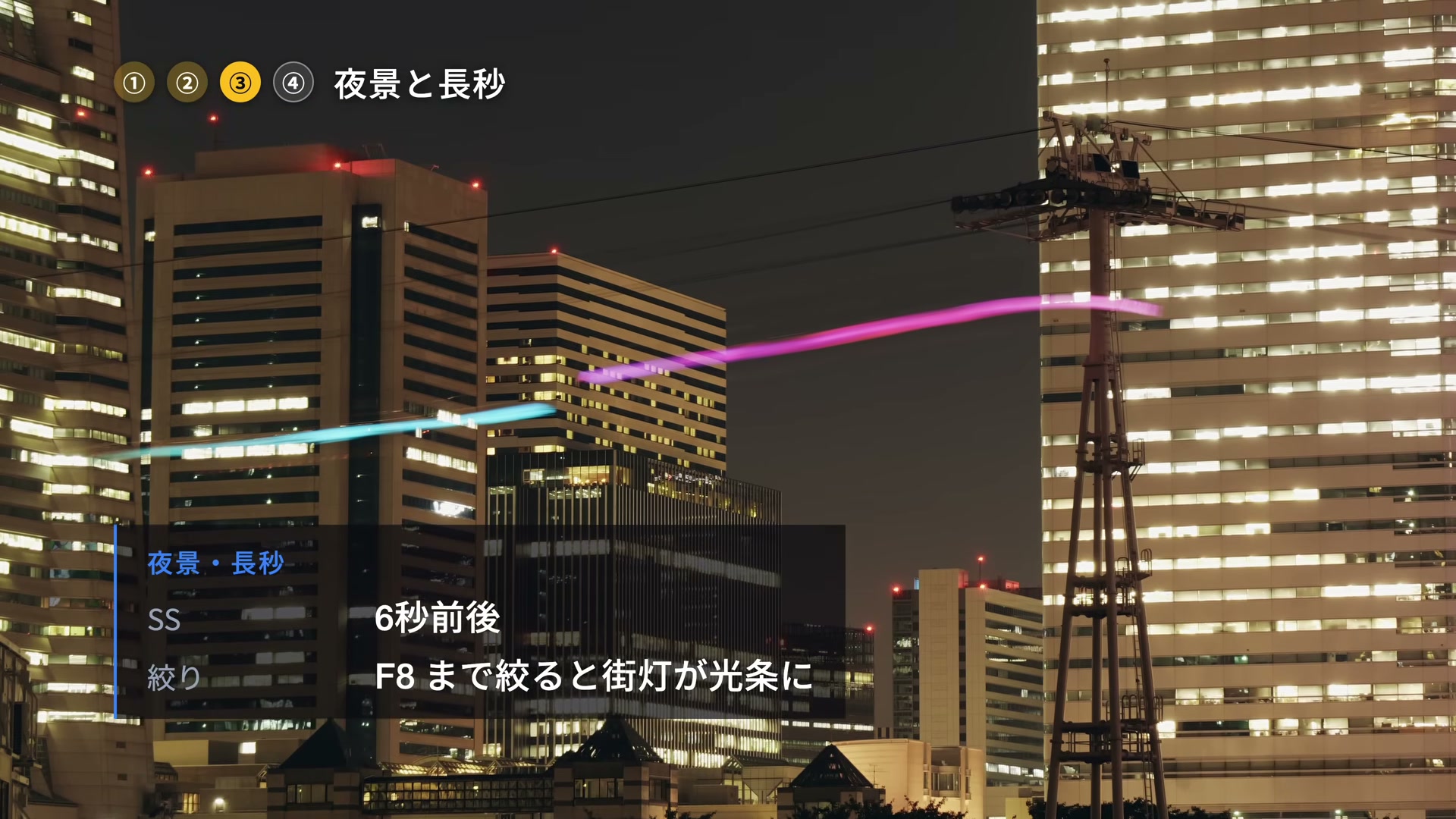
Third is night scenes and long exposures. Take the shake out and city light stretches into something far cleaner than your eye reports.
This one carries an advantage the other three don't: it doesn't depend on the weather. Stars and sunrise are entirely at the mercy of the forecast. A night cityscape works under cloud, and it works after rain — in fact wet ground reflecting light usually improves the picture. If you don't want to carry a tripod out only to be rained off, this is the most dependable use for it.
My settings (night scenes)
- Shutter: around 6 seconds
- Aperture: stopped down to f/8
At f/8, street lights turn into clean starbursts. You cannot choose that aperture without a tripod — handheld at f/8 there simply isn't enough shutter speed to hold the frame steady. That's the honest case for a tripod: it widens the set of pictures available to you.
Shot 4: Locked-off video and timelapse
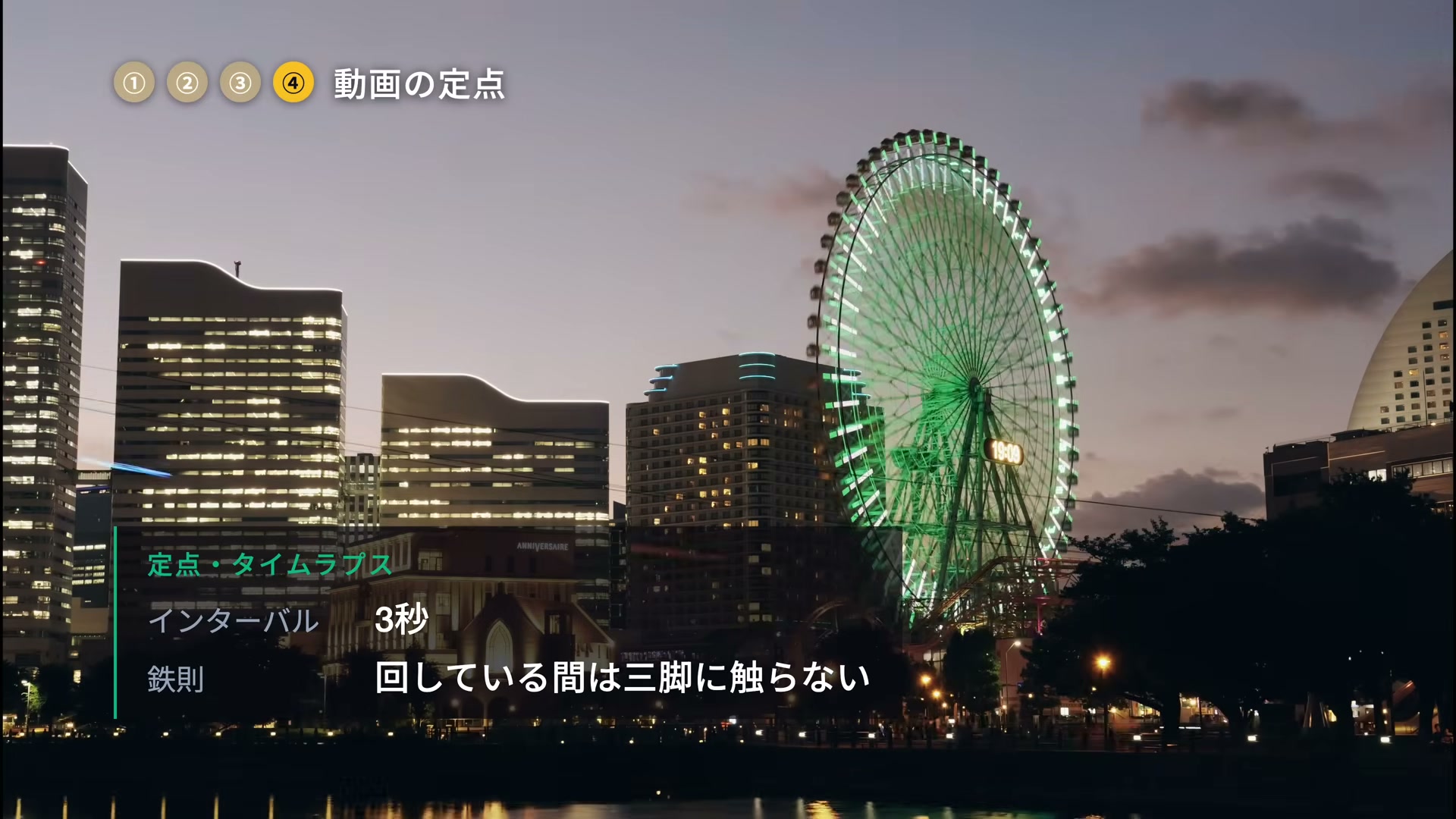
Fourth is locked-off video and timelapse. Remove the handheld movement and footage moves noticeably closer to feeling composed rather than captured.
My settings (locked-off timelapse)
- Interval: 3 seconds
More important than any setting is what you do while it runs. Do not touch the tripod once it's shooting. One contact shifts the framing for a single frame, and that frame jumps in the finished sequence. Half an hour of patience can be undone in one careless moment. I now stand a step away from the tripod and simply wait.
Three situations where I'd leave it at home
In fairness, here's when not to bother.
1. Daytime snapshots — handheld is fine, and setting up costs more than it returns 2. Shooting on the move — if you're walking, you won't stop to deploy it 3. Days when you're counting grams — on a long traverse or a multi-day route, leaving it behind is a perfectly sound decision
This is not a tripod for every walk. It's a tripod for days when there's a shot that takes time.
The honest weakness: the centre column at full extension
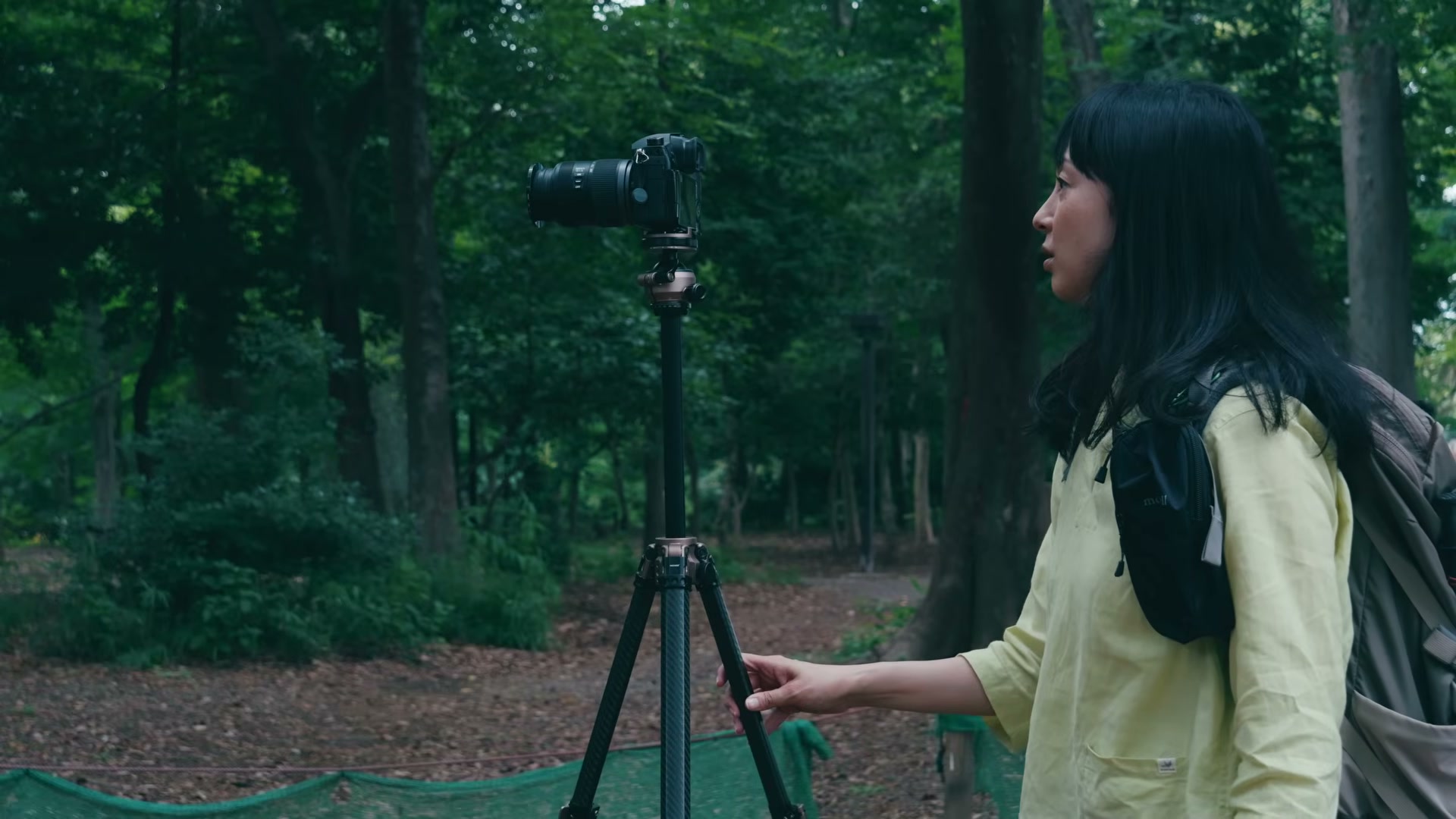
One real drawback, stated plainly.
Run the centre column all the way up and the tripod takes noticeably longer to settle. The time between letting go and the vibration dying away grows. Short exposures won't care. A long timelapse very much will.
It is, however, a problem you can design around.
- Don't extend the centre column at all — get your height from the legs. This alone solves most of it
- Swap in the supplied short column to drop the centre of gravity
- On days when you truly need the height, hang your pack from the hook under the centre column as ballast
When I shot a Milky Way timelapse at Lake Yamanaka, the column stayed fully retracted with a bag hung underneath, and a long interval sequence came back without a trace of movement.
While we're here, a note on the load rating. "10 kg" means it will hold, not that it will hold still. Ten kilos on a fully extended column will move; two kilos with a low centre of gravity won't. A load rating is not a stability guarantee.
Common questions
What actually weighs 10 kg?
Not much that you'd put on a travel tripod. A mirrorless body with a telephoto is 2–3 kg, so there's a lot of margin. As above, treat that margin as "it will hold", not "it will be steady".
What does Arca-Swiss compatible mean?
It's the standard for the plate that attaches to your camera. If a head or clamp is Arca-Swiss compatible, your camera drops straight onto it. Once you own more than one support system, this saves a surprising amount of irritation.
Carbon or aluminium?
Carbon is lighter, settles faster after a knock, and isn't painful to touch in winter — and it costs more. Aluminium is cheaper and tough, but heavy. For anything I'm carrying uphill, I'll take carbon. You're paying that difference for the chance that it actually comes with you.
In short: I can bring the time home now
Most of the time you don't need a tripod. I still believe that.
But on the days when I want to bring the time home, this was the only one I wanted to carry. Light enough that it came along; rigid enough to run for the several minutes it took the colour to change, without drifting. Views that used to end at "that was beautiful" now exist as footage.
It's a good fit if you:
- want to photograph the passage of time itself — dawn, stars, night light
- want a tripod but keep leaving yours at home because of the weight
- won't compromise on height (158 cm) or load, but can't justify ¥110,000
If your constraint is carry-on luggage, or you shoot low angles constantly, the Peak Design — 39.1 cm folded, 14 cm minimum height — is worth the money. Choose on how you'll actually use it.
NEEWER LT39 carbon travel tripod (158 cm max height, 49 cm folded, approx. 1.2 kg, 10 kg load rating, Arca-Swiss compatible)
¥47,999 (manufacturer's price at time of filming)
※ This article is based on a video made with a product supplied by NEEWER. Specifications reflect the manufacturer's published figures at the time of filming and my own checks on the unit; specifications and prices are subject to change.
※ As an Amazon Associate, Yoshimi Iwasaki earns from qualifying purchases.
Related posts

WUBEN G5 Honest Review | Can a 52 g Keyring Light Get You Up a Mountain After Dark?

A Whole Summer in 10 Montbell Pieces | An Honest Minimal Wardrobe

Montbell Spring Sun Protection, Part 2: The Active Setup | Shorts × Leg Covers for Movement and Coverage

Nokogiriyama Day Hike, Chiba | Hell's Lookout, Quarry Cliffs and a Beginner-Friendly Loop from Hamakanaya
Enjoyed this? Subscribe on YouTube.
Honest reviews of hiking gear and apparel, plus hiking vlogs from Japan — new videos every week.
▶ Subscribe on YouTube →Brands: for video production and wear-test enquiries, get in touch →
This post contains affiliate links. Prices and specifications are as of the video's publication date. Most items are sold in Japan.