Blog
SUUNTO CORE 2 Review | The Storm Alarm Went Off in a Whiteout on Mt. Nasu (Chausu-dake & Asahi-dake)
2026.10.23
Blue sky and autumn colors in the morning. Fog and strong wind from midday. And in the afternoon, deep in a whiteout, my wrist started beeping.
I spent a day hiking Mt. Nasu (Chausu-dake and Asahi-dake) in Tochigi, Japan, at the peak of the autumn colors, wearing Suunto's new mountain watch, the SUUNTO CORE 2. It felt like doing two completely different hikes in one day — a sunny one and a stormy one.
Here's my conclusion up front: the CORE 2 is a watch that tells you the weather is turning before it does. You can see the sky change with your own eyes. What this watch adds is how fast it's changing — in numbers and with a sound. It runs on a coin battery, so there's nothing to charge, and it focuses on the three things you actually need on a mountain: altitude, air pressure and direction.
This article is based on a sponsored (PR) video made at Suunto's request. What I write here is what I experienced on the mountain that day, plus figures I checked against the user guide and official information.
What is the SUUNTO CORE 2? Just the "ABC" you need on a mountain
The CORE 2 is what's called an "ABC watch": A for Altimeter, B for Barometer, C for Compass. It narrows things down to the information you want on your wrist when hiking.
Suunto started in Finland in 1936 with a liquid-filled compass that solved the problem of shaky, hard-to-read needles. In 1998 the company put altitude, pressure and direction into a single wristwatch, and in 2007 the original CORE arrived and became a long-running outdoor classic. In Suunto's 90th year, that watch has been renewed for the first time in about 20 years — this is the CORE 2.
Key specs:
- Price: ¥39,600 (tax incl.), released October 22, 2026 in Japan
- Weight: 74 g (with strap)
- Battery: CR3032 coin cell, up to 15 months (Time Mode). No charging, and you can replace the battery yourself
- Water resistance: 10 ATM, with a depth meter (good for snorkeling-level use)
- Screen and toughness: Gorilla Glass, tested against selected MIL-STD-810H (U.S. Department of Defense standard) tests
- Backlight: red or green, your choice
- App: syncs with the Suunto app over Bluetooth (time, sunrise/sunset, steps, firmware updates)
- GPS: none. The display is in English
No charging — and that matters more than it sounds
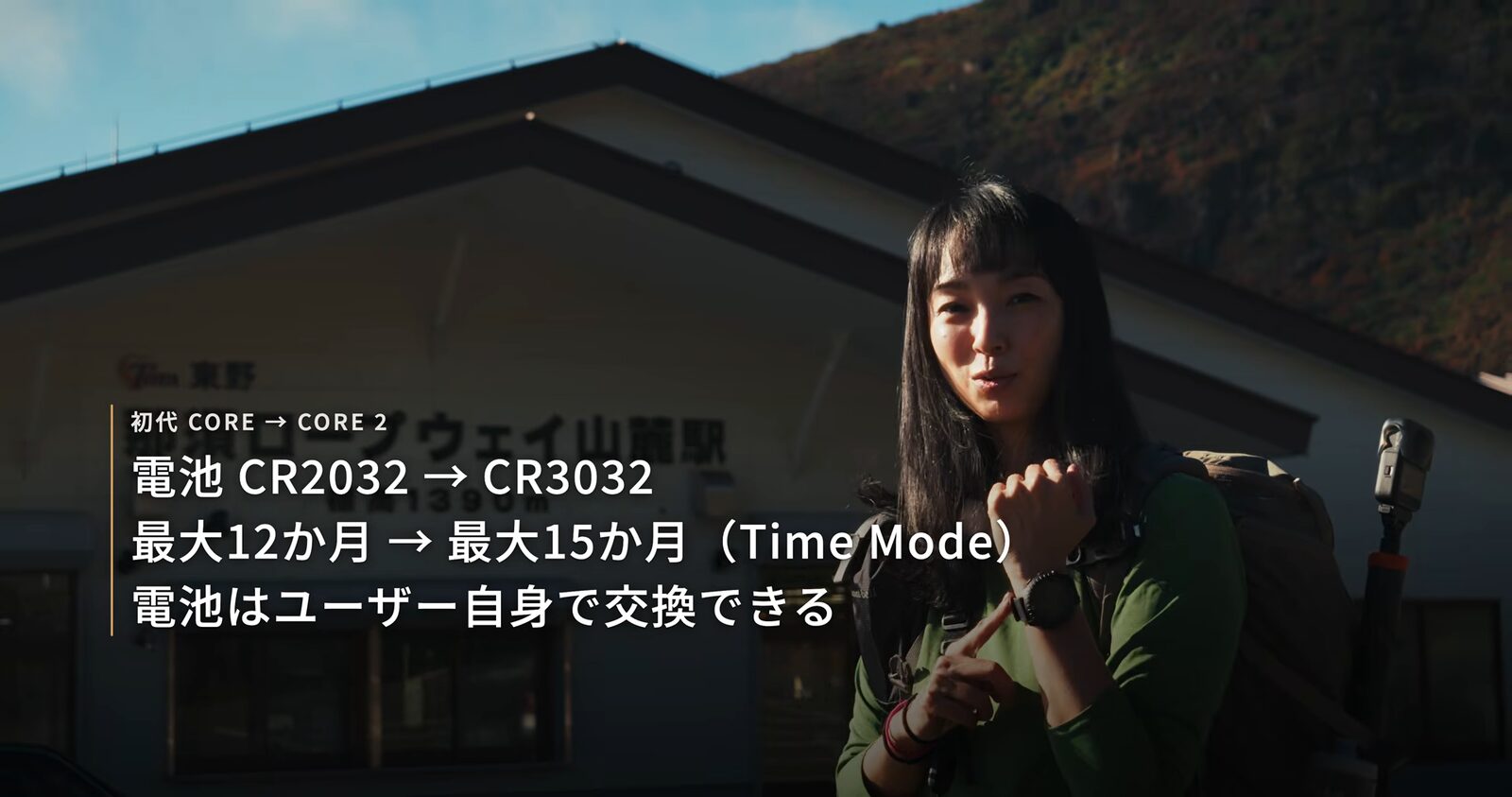
When I arrived at the Nasu Ropeway base station, the first thing I felt was relief at not having to think about charging at all.
Smartwatches and GPS watches are convenient, but forget to charge one the night before and your morning on the mountain starts with a small worry. The CORE 2 runs on a coin battery, so charging simply isn't part of the routine. Having a backup that doesn't depend on a battery you have to top up — separate from your phone and your rechargeable watch — was exactly what I wanted from this watch.
The original CORE was battery-powered too, but the cell has changed from a CR2032 (up to 12 months) to a CR3032 (up to 15 months), so it lasts longer.
Set the altimeter at the ropeway station
The CORE 2 calculates altitude from air pressure, which means the reading drifts as the weather changes. So the basic routine is to calibrate it at a place with a known elevation.
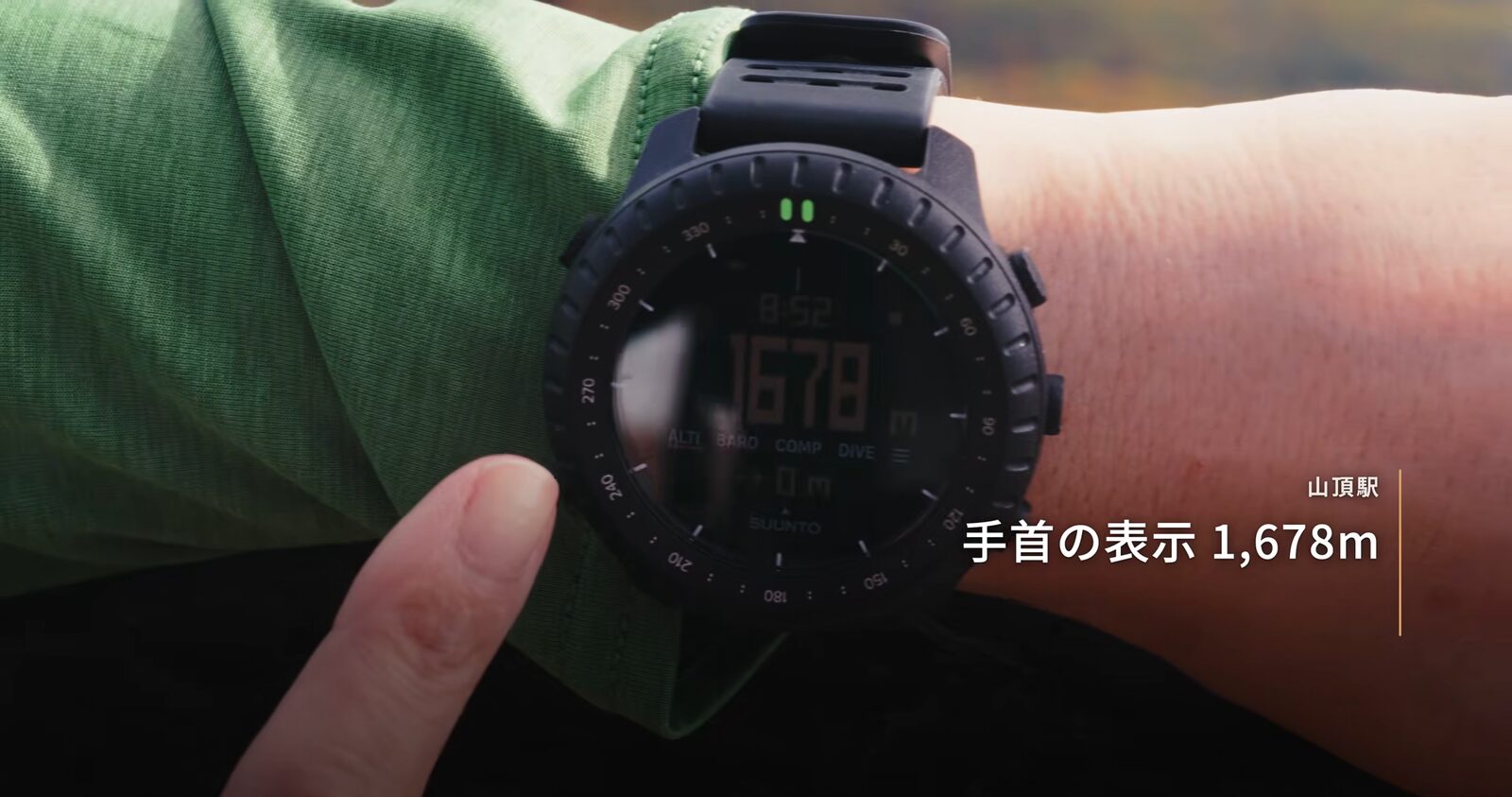
I set it at the ropeway base station (1,390 m) before boarding. At the summit station, my wrist read 1,678 m. I reset it to zero there and started up Chausu-dake. With the zero set, you can see at a glance how much you've climbed. Near a big boulder partway up, it showed "145 m climbed, 1,824 m." Seeing your own effort turned into numbers is quietly satisfying.
Mountains are full of places with posted elevations — huts, summit markers, trailhead signs. Re-calibrating as you pass them helps keep the reading accurate.
Up Chausu-dake: readable even in bright sun
From the summit station it's about an hour's climb to the top of Chausu-dake over rough, rocky ground. There were moments I nearly knocked my wrist on a rock, but the screen is Gorilla Glass and the watch has been put through selected military-standard tests, including freezing rain, salt water and intense sunlight. Being able to use it without babying it is important in a mountain watch.
Even under strong autumn sunshine, the numbers were easy to read. A quick glance at your raised wrist is much easier than pulling out a phone.
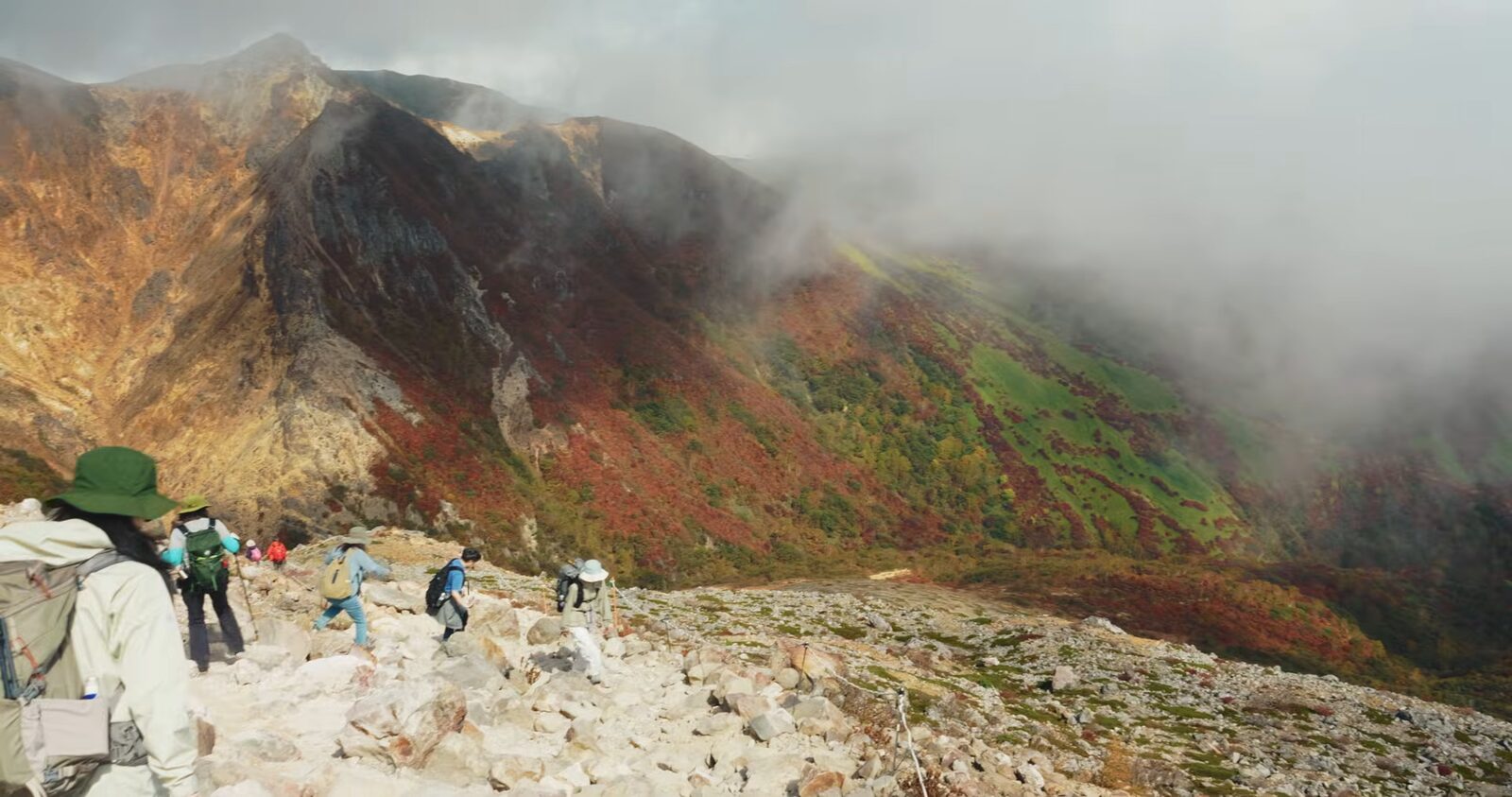
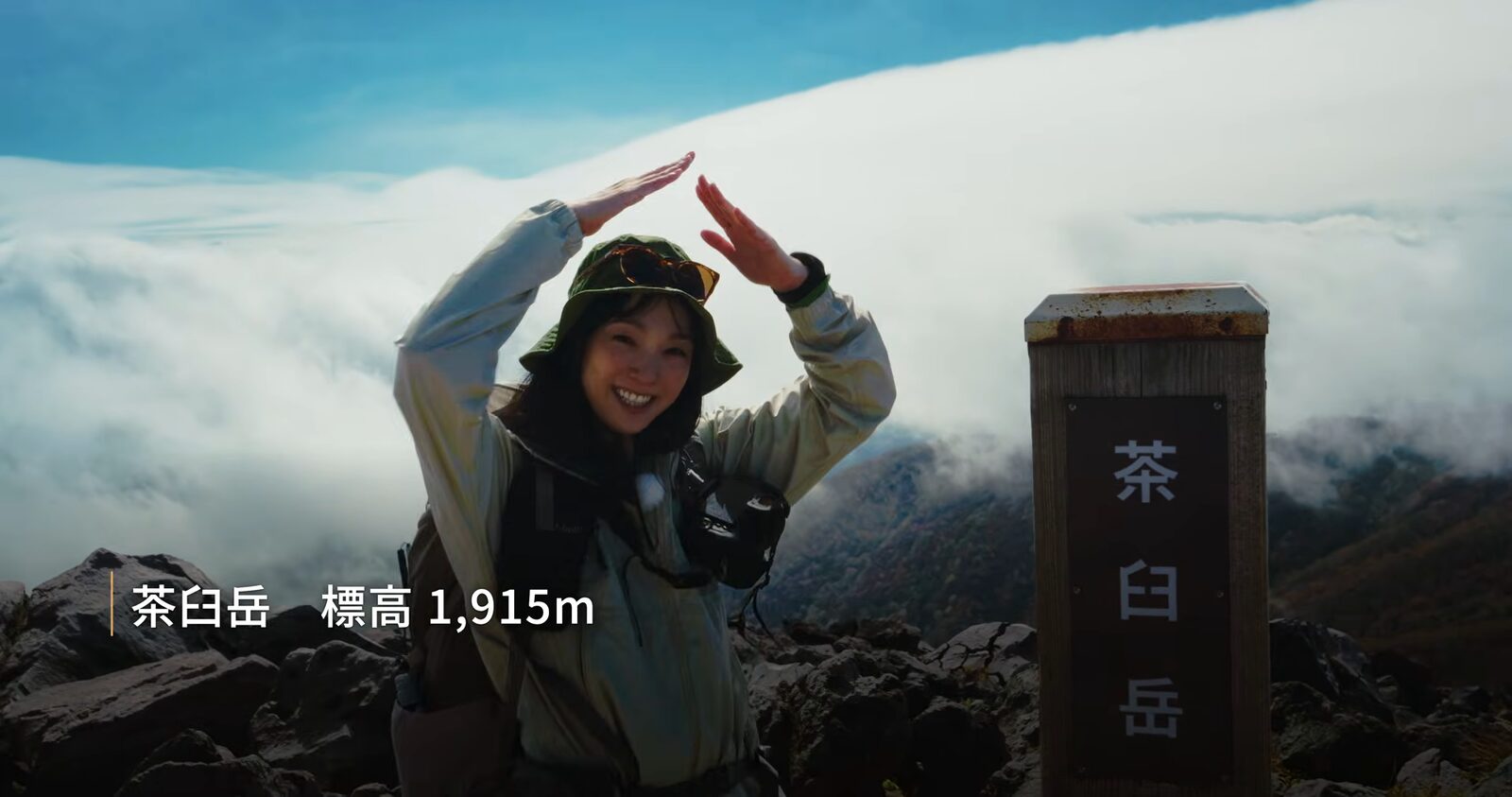
Chausu-dake has an "ohachi-meguri," a loop around the crater rim. The autumn colors on the slopes were at their best, with a sea of clouds on the other side. Mt. Nasu is known for strong wind, though, and even on a warm day the wind was cold and fierce. A wind shell felt absolutely essential.
Reading pressure: watch how fast, not just how much
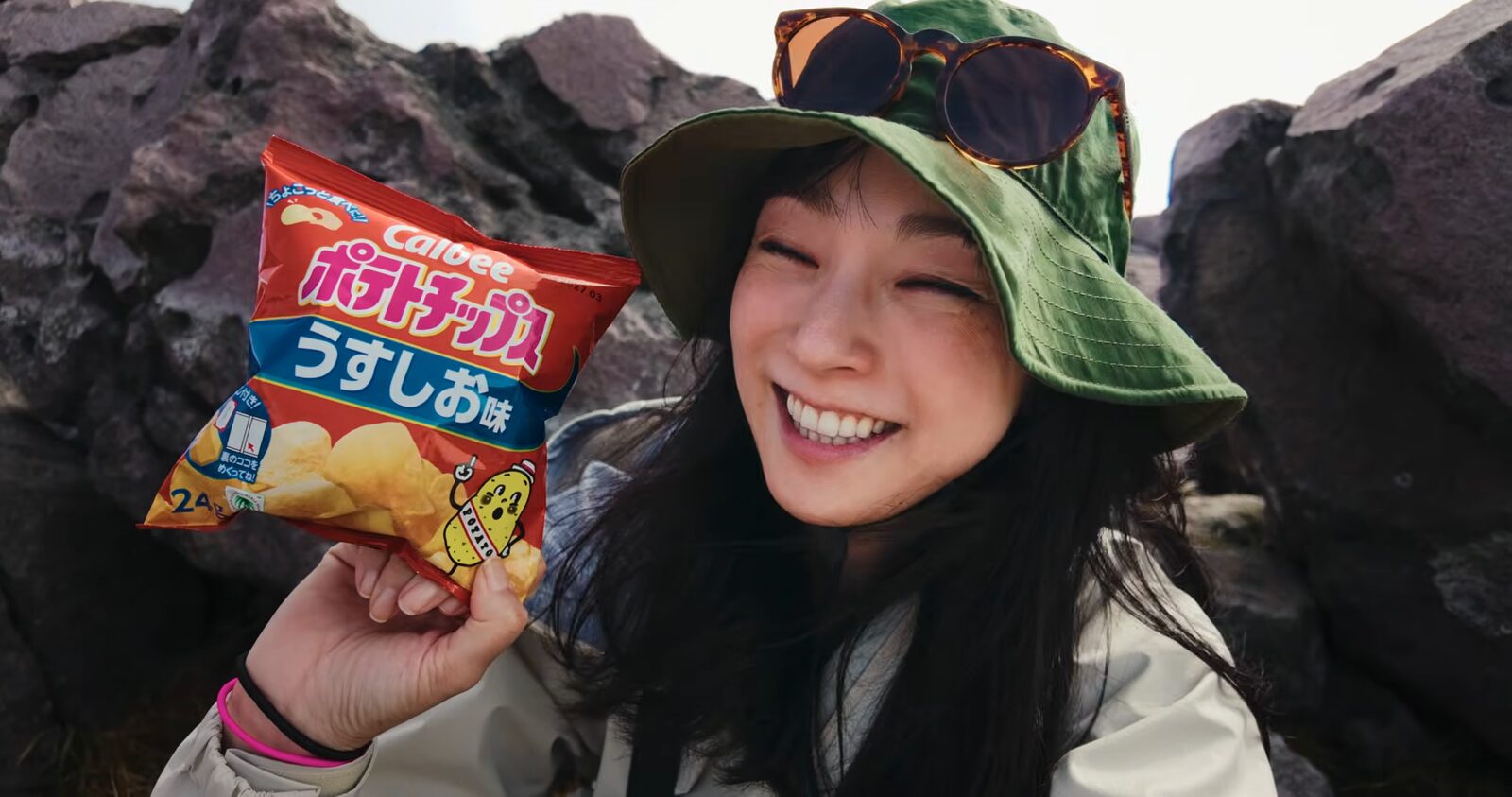
Taking a break at the summit, I noticed my bag of potato chips had puffed up like a balloon. Simply climbing lowers the air pressure — that's why.
This is the key to using a barometer in the mountains. Pressure drops as you gain elevation, so "the pressure went down" doesn't automatically mean "the weather is getting worse." To read the weather, stop and watch how quickly the pressure is changing while you stay in one place. The faster it falls, the more likely the weather is to break down.
My watch (showing sea-level pressure) read 1020 hPa at the summit station and 1010 hPa on Asahi-dake. But the user guide notes that if you climb or descend while in the barometer (BARO) profile, the watch can mistake the change in height for a change in pressure. On the same day, the Japan Meteorological Agency's sea-level pressure at Shirakawa (about 25 km north of Mt. Nasu) went from 1018 hPa at 9:00 to 1014 hPa at 13:00. So the real weather-driven drop was about 4 hPa, and my wrist's −10 hPa likely included the effect of climbing. That's the honest reading.
Still, the pressure really had been falling all morning. And soon, you could see it.
Lock your bearing before it goes white
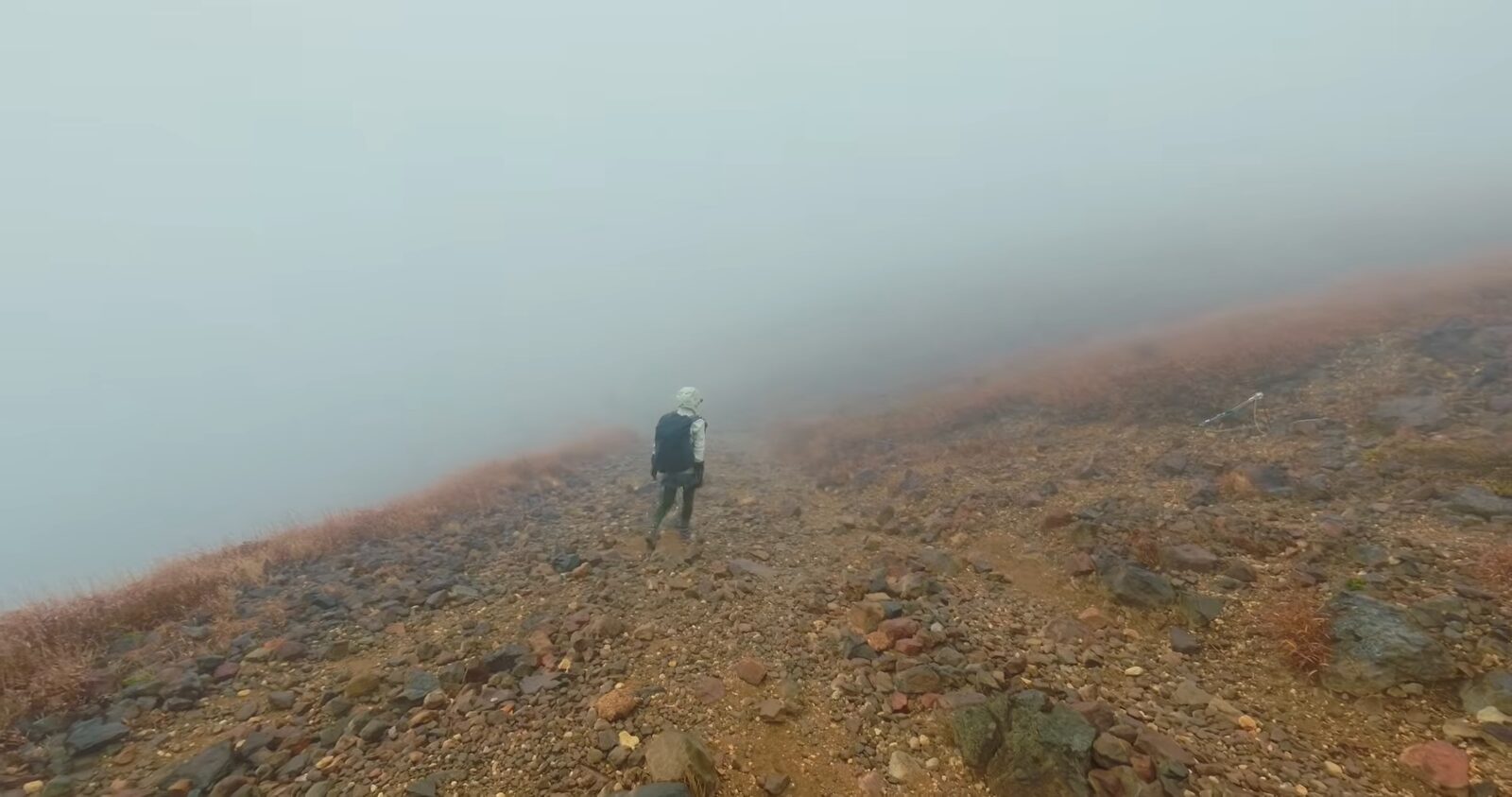
From Chausu-dake down toward Minenochaya, where the emergency hut stands, fog started rising. Clear one moment, white the next, then clear again — a restless sky.
This is where I used bearing lock. Point the watch in the direction you want to go and lock it; if you drift off course, an arrow tells you "you're off." Turn back the right way and the arrow says "this way."
The important part is to set your direction while you can still see. I locked onto Asahi-dake while it was still in view.
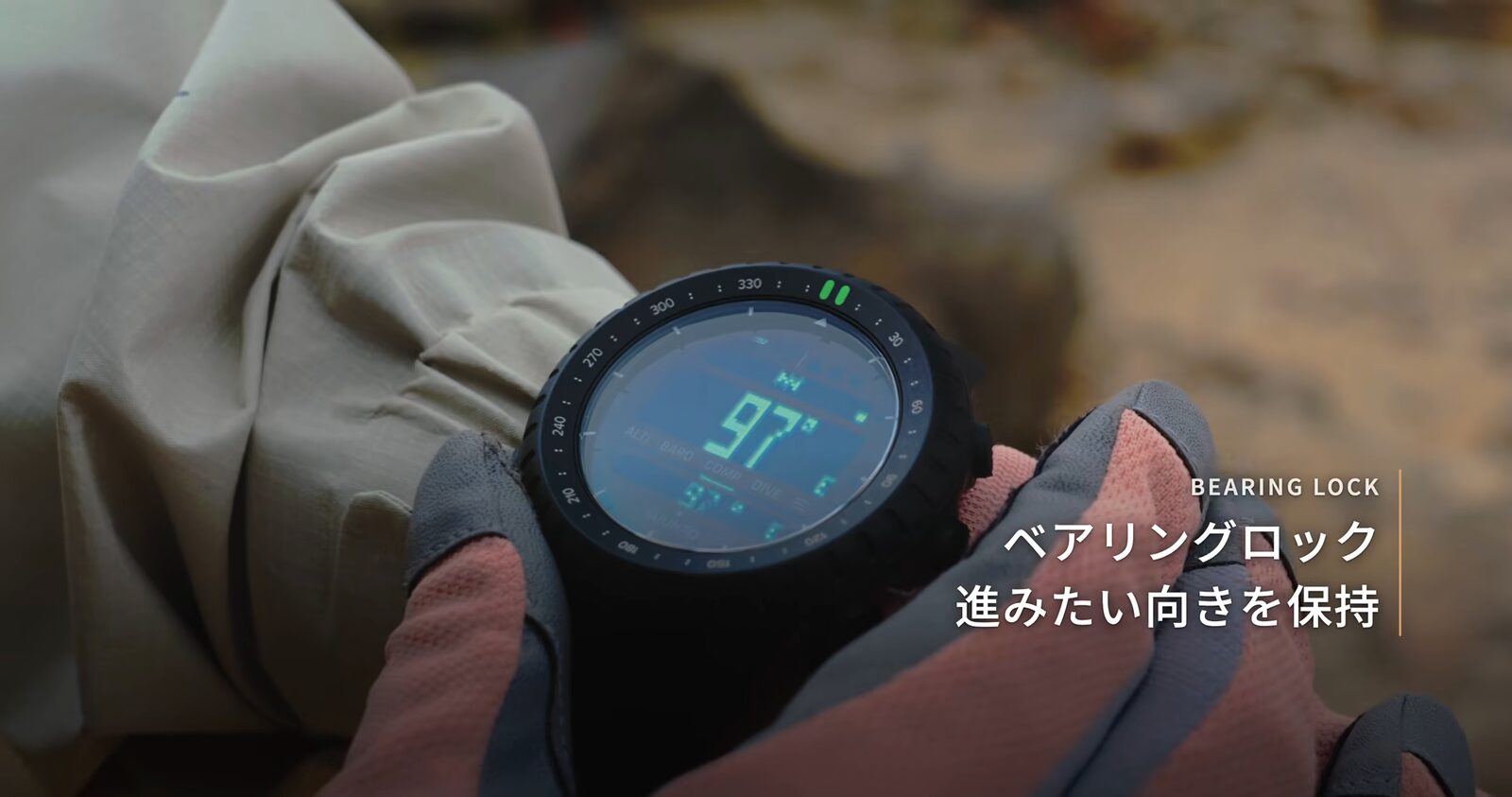
Then came the famously windy ridge. The wind was strong enough that just standing felt like I might get blown away — a hiker passing by told me, "This wind is a local specialty, lucky you got to experience it." Everything around me was white. But the compass kept showing me my drift, so I always knew which way I was heading. Knowing your direction in a total whiteout is more reassuring than I expected.
Of course, bearing lock gives you a direction, not turn-by-turn route guidance (the CORE 2 has no GPS). You still follow the trail itself with a map, signposts and paint marks.
The summit of Asahi-dake: pure white
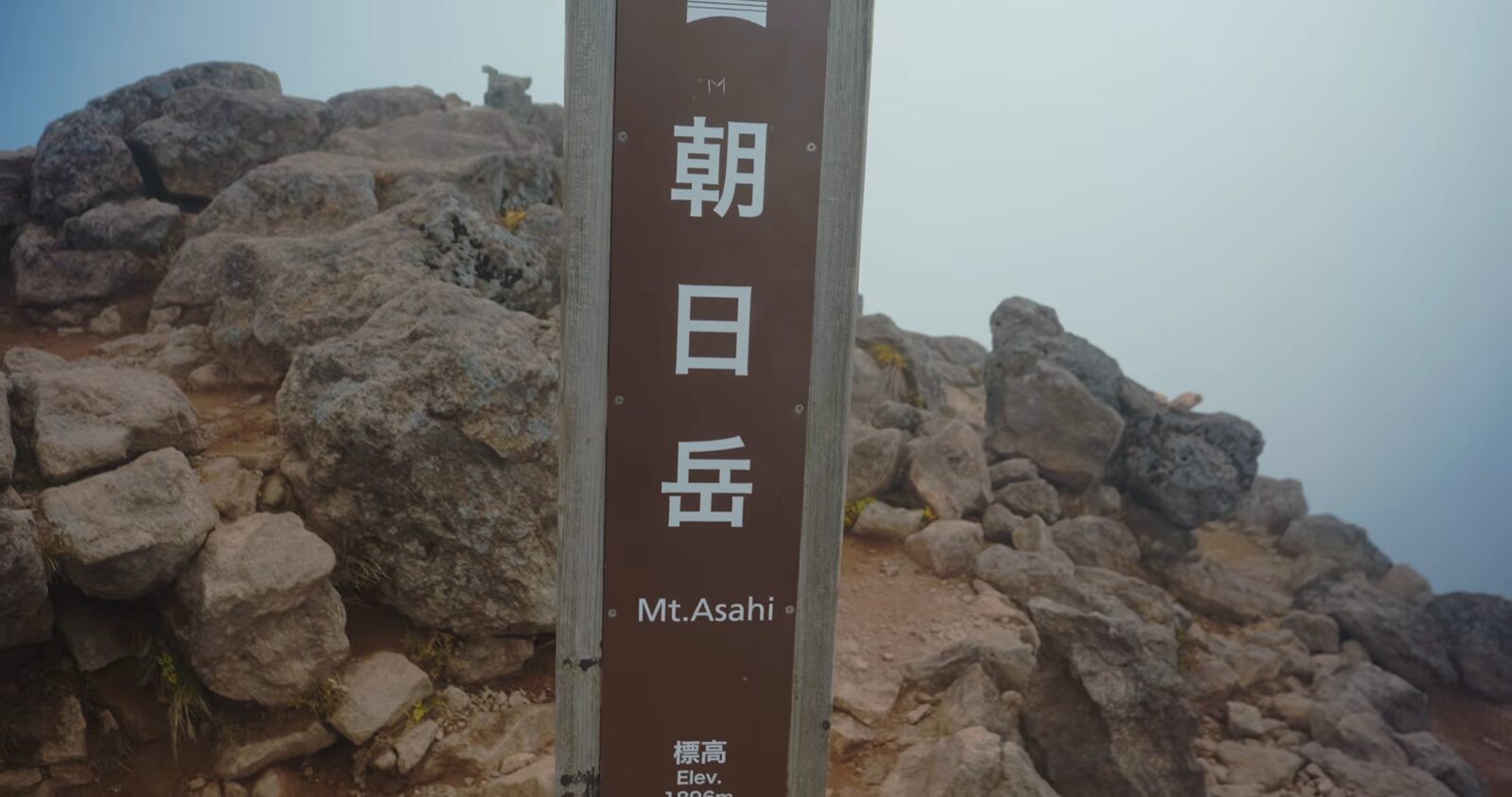
By the time I reached Asahi-dake (1,896 m), the summit was completely socked in. The morning's blue sky felt like a lie. I couldn't see anything, and honestly, it was scary. It was 1:32 p.m. I barely stopped before heading down.
The storm alarm went off
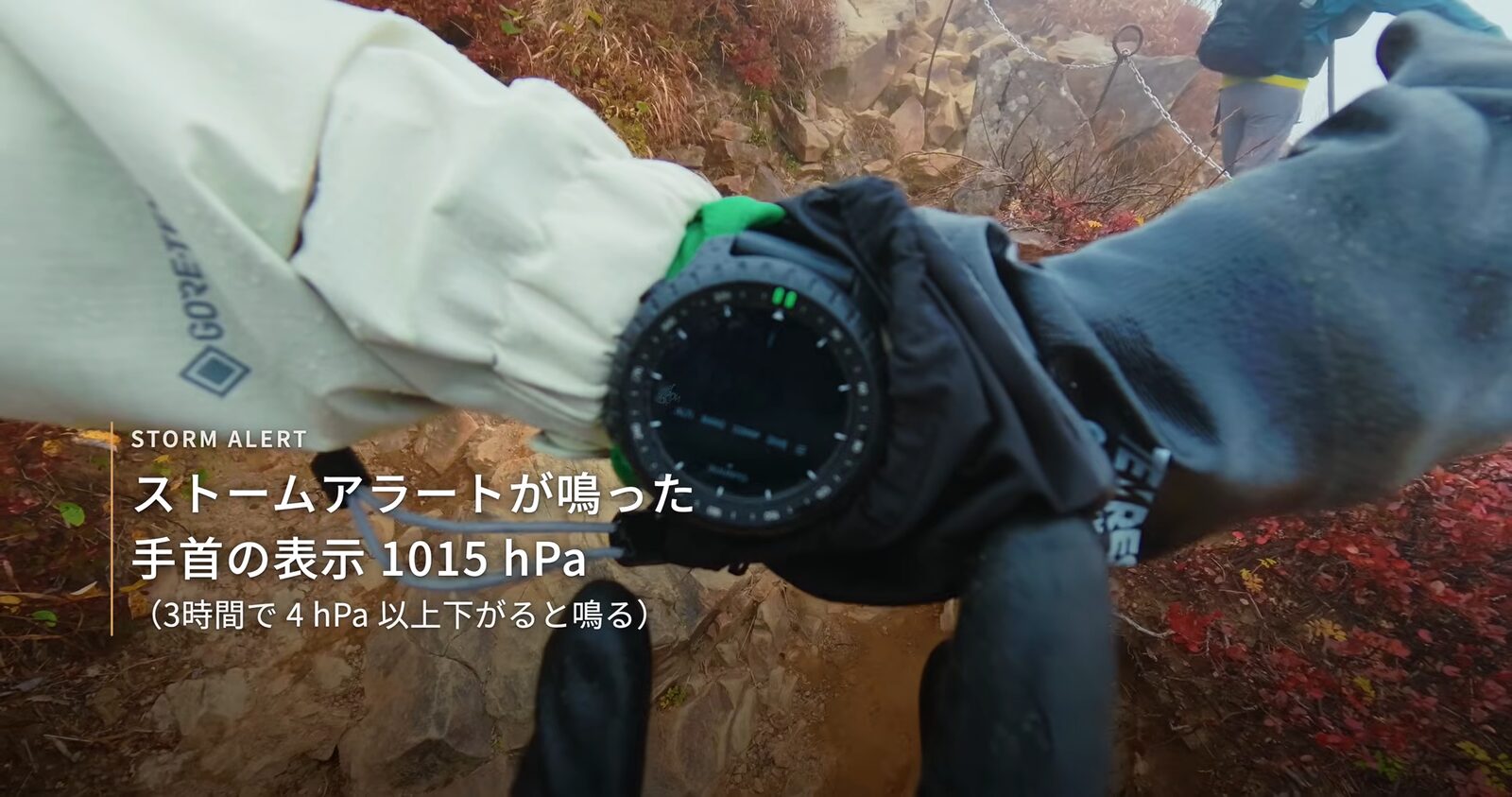
A little way into the descent, my wrist started beeping. It was the storm alarm.
The storm alarm sounds when air pressure drops sharply in a short time. According to the user guide, it goes off when pressure falls by 4 hPa or more within three hours, and it works in the barometer (BARO) profile. My watch showed 1015 hPa when it sounded. As I explained above, some of that may also come from changes in elevation. But putting it together with the sky, the wind and the cold, I had no doubt things were getting rough.
Because it beeped, I switched to my waterproof gloves and put on my rain jacket right there. The watch backed up, with numbers and sound, what my eyes were already telling me was suspicious — and that, I think, is where this watch earns its place.
I walked on with total focus until I finally reached the emergency hut, which I couldn't see through the white until I was close. Catching my breath inside, I thought about gear: two pairs of gloves including a spare, two lights, and in this cold, another hat would have been nice. On a mountain where the weather turns, "one more" really pays off.
Soaked to the gloves — the watch didn't care
From the hut I hiked down instead of taking the ropeway (to the trailhead near Toge-no-chaya; about 5.5 km for the whole route that day).
The fog soaked me right through to my gloves, but the watch was fine. Water resistance has gone up from 3 ATM on the original to 10 ATM, so rain and splashes are no problem, and you can even swim with it on. The numbers stayed clear when wet, and the large buttons are easy to press with gloves on.
Backlight and app: what's new since the original
On dark trails, you can switch the backlight to red or green. The original CORE only had green; the CORE 2 lets you choose.
The other big change is Bluetooth. Connect to the Suunto app on your phone only when you need to, and sync the time, sunrise/sunset and steps. You can also update the watch's software from the app. But altitude, pressure and the compass all work on the watch alone, without your phone. If your phone dies, the information on your wrist doesn't. That's what makes it reassuring as a backup.
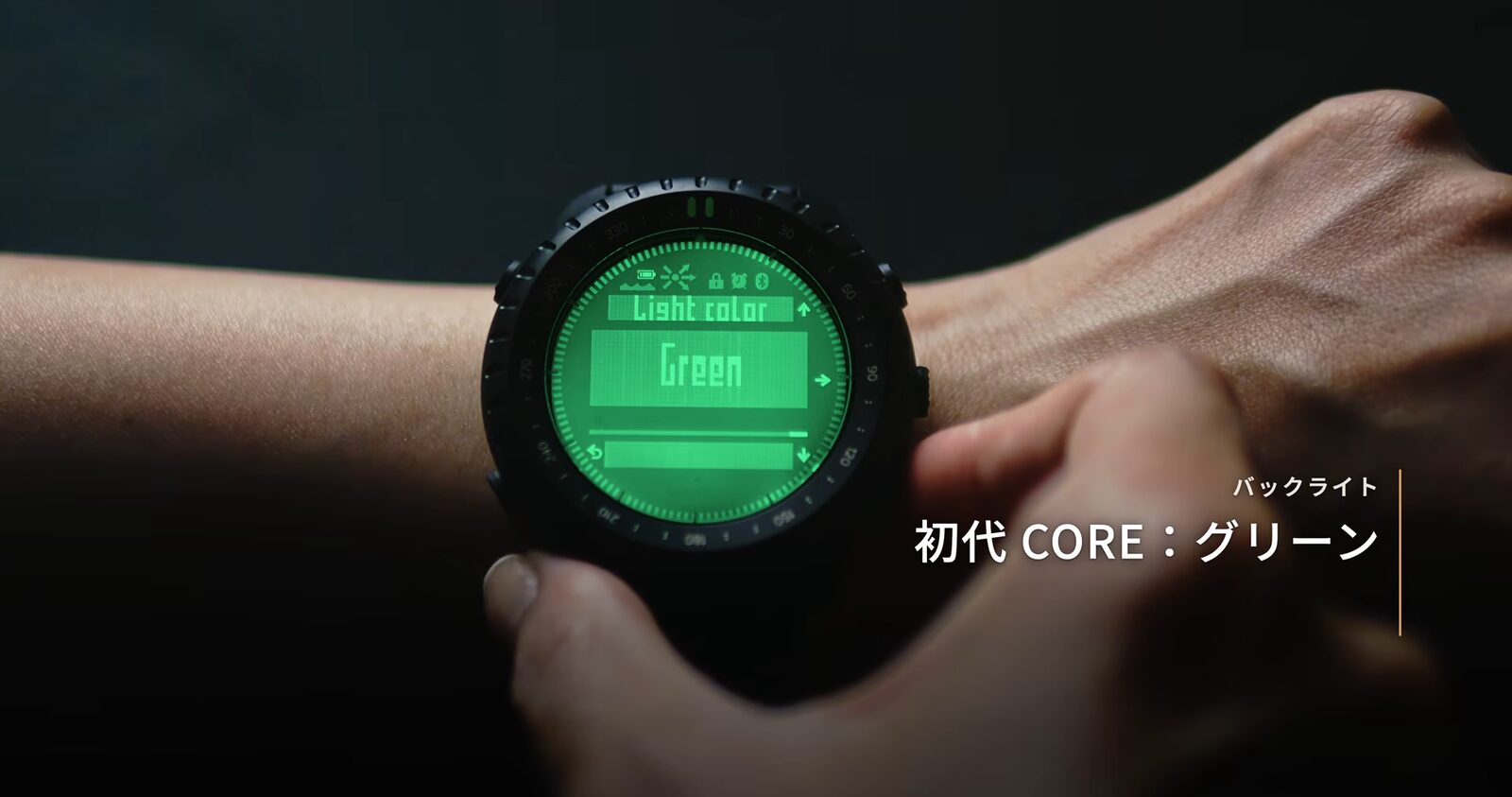
Here's how it compares with the original CORE:
- Battery: CR2032, up to 12 months → CR3032, up to 15 months (both need no charging and are user-replaceable)
- Water resistance: 3 ATM → 10 ATM (with depth meter)
- Backlight: green only → red or green
- App: none → Bluetooth sync with the Suunto app
Who the CORE 2 is for — and who it isn't
After a full day with it, I think it suits:
- People who don't want to think about charging: battery-powered, up to 15 months. No more forgetting to charge the night before
- People who want altitude, pressure and direction at a glance: just raise your wrist
- People who want to operate it with gloves on: big buttons make it easy in winter and rain
- People who want one more layer of backup beyond their phone or GPS watch
It may not suit:
- People who want GPS tracks or map navigation: the CORE 2 has no GPS. If you want route navigation, a GPS watch like the Suunto Vertical 2 is a better fit
- People who want a Japanese-language display: the display is in English
SUUNTO CORE 2 (altimeter, barometer & compass ABC watch, battery-powered, 74 g) — official store
¥39,600 (tax incl.) / released October 22, 2026
SUUNTO CORE 2 (Amazon Japan)
Summary: I saw the sky change. My wrist told me how fast.
Blue sky and beautiful autumn colors in the morning — I thought the rest of the day would go the same way to Asahi-dake. Then it flipped to fog and wind. It felt like several hikes in one.
Through all of it, the SUUNTO CORE 2 had the features a hike actually needs, and I used it with confidence. The three that mattered most:
- Storm alarm: it sounded early enough for me to get my gloves and rain jacket on before things got worse
- Bearing lock: even in a whiteout, I knew which way I needed to go
- No charging: no battery worries before setting out
Of course, weather decisions shouldn't come from your wrist alone. Use it alongside forecasts, maps and your phone — your wrist is one more layer of preparation. Seen that way, the CORE 2 is a watch that helps you make decisions a little sooner. On a mountain, who notices the weather changing first: the sky, a weather app, or your wrist? Take a look in the video.
*This article is based on a sponsored video made at Suunto's request (PR | Suunto). Pressure and altitude figures are what the watch showed that day; the JMA figures are sea-level pressure at Shirakawa on the same day.*
*As an Amazon Associate, Yoshimi Iwasaki earns from qualifying purchases.*
Related posts
How Accurate Is a GPS Watch Under Tree Cover? | Suunto Vertical 2, Measured on Mount Nikko-Shirane (2,578m)

Do You Really Need a GPS Watch for Hiking? | 5 Features, Tested on Mount Amagi

Norikuradake Day Hike | A Bus to 2,702 m, and an Honest Report from Kengamine, Japan's Easiest 3,000 m Peak

Why Montbell's Wickron T-Shirt Is Hard to Beat | 4 Honest Reasons It Handles Sweat, Odour and Years of Washing
Finished reading? Watch the video.
Honest reviews of hiking gear and apparel, plus hiking vlogs from Japan — new videos every week on YouTube, and short clips on Instagram.
Brands: for video production and wear-test enquiries, get in touch →
This post contains affiliate links. Prices and specifications are as of the video's publication date. Most items are sold in Japan.
Music
Music from this video
Original songs featured in my videos — listen right here.
- 2:32確かな一歩にOne Sure StepTheme song from a day of autumn colors and fog on Mt. Nasu